
Dragon Age: The Veilguard — Excluding the Choice That Mattered Most
Spoiler warning for Dragon Age: The Veilguard ! If you’re still playing, come back later.
One thing I’ve consistently established is that my favorite aspect of BioWare games is the fact that the player’s choices impact the story. Choices mattered in developing the main character’s personality, to forming relationships with companions, to plot details ranging from minor to major. They had consequences, and they provided players a way to become an active part in the story.
Some BioWare games have pulled off the ripple effect of choices better than others. For example, the Mass Effect series did a wonderful job of including cameos and dialogue choices that spanned across the trilogy, showing the long-term impact of Shepard’s actions. The Dragon Age series, prior to Veilguard, allowed players to save their unique world states in the Dragon Age Keep, which they could then upload when starting a new game. Within this series, I would argue that Origins had the most dynamic, overarching choices, whereas DA2 and Inquisition followed a more linear structure, where choices influenced companion relationships and allied strength more than the final outcome. Even so, Inquisition still laid the groundwork for a world state that Veilguard ultimately chose to ignore.
I’ve mentioned in previous posts that learning Veilguard would not access the Dragon Age Keep was a major red flag. It established upfront that the majority of the choices you made and the characters you helped shape in previous games would not matter. And when that’s the main draw of an interactive RPG, something essential is lost.
A Narrowing of Choice
Yet Veilguard’s choices feel even more limited than previous Dragon Age games. As mentioned before, Rook seems to have a largely fixed personality, regardless of background or dialogue options.
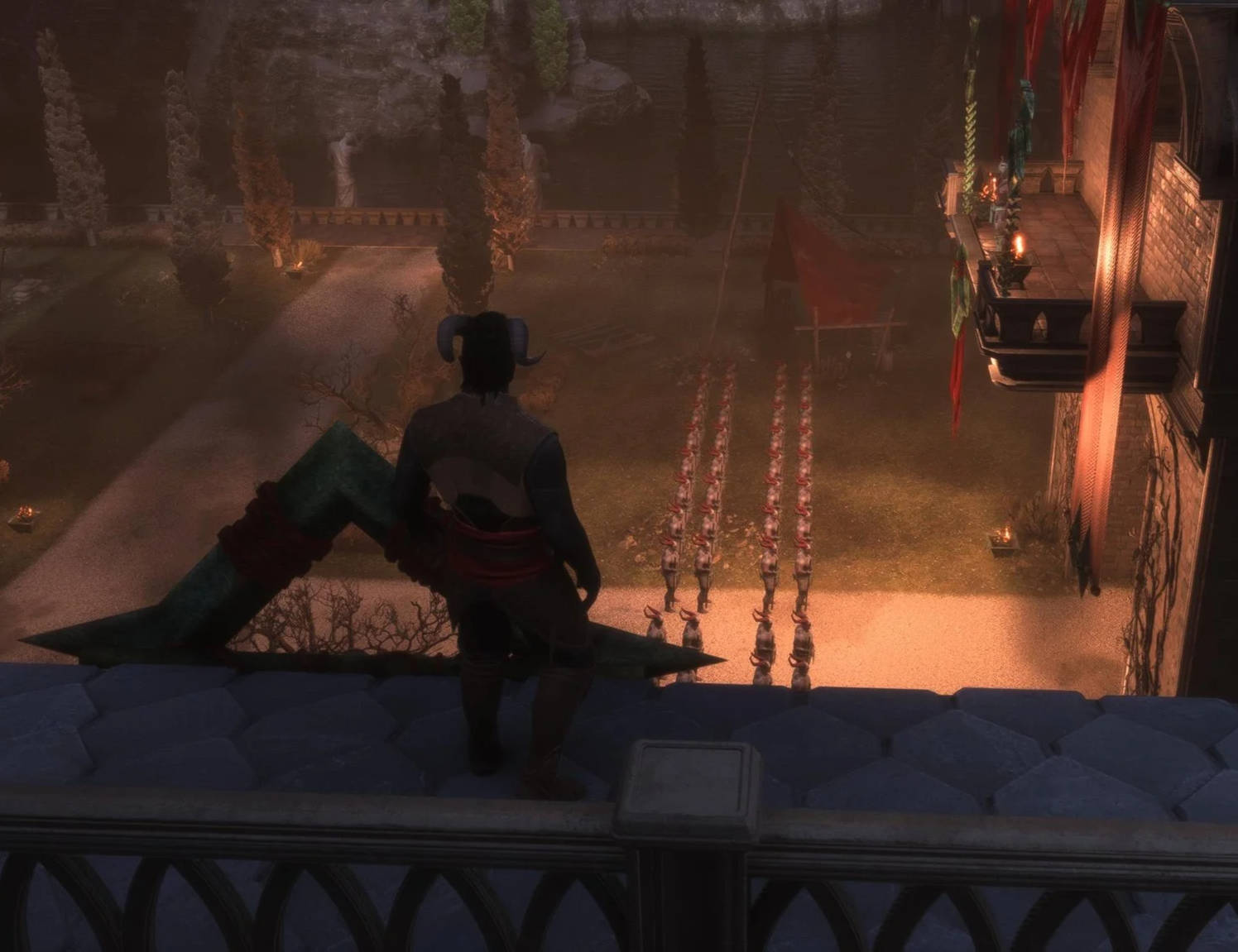
“Ah yes. Nothing like watching your own people occupy your city.”
For example, in one playthrough, I chose a Qunari Antivan Crow, expecting that background to create meaningful tension, especially given the Antaam/Qunari occupation of Treviso. Yet very little changed. Rook was treated almost identically to any other version of the character.
Beyond that, the number of impactful decisions is surprisingly small. There are only one or two minor choices that significantly alter later outcomes, along with four “major” decisions that ultimately boil down to choosing between A or B. Most remaining choices revolve around companion paths, again, framed as A or B, while helping them achieve “Hero of the Veilguard” status, something the game repeatedly reminds you of.
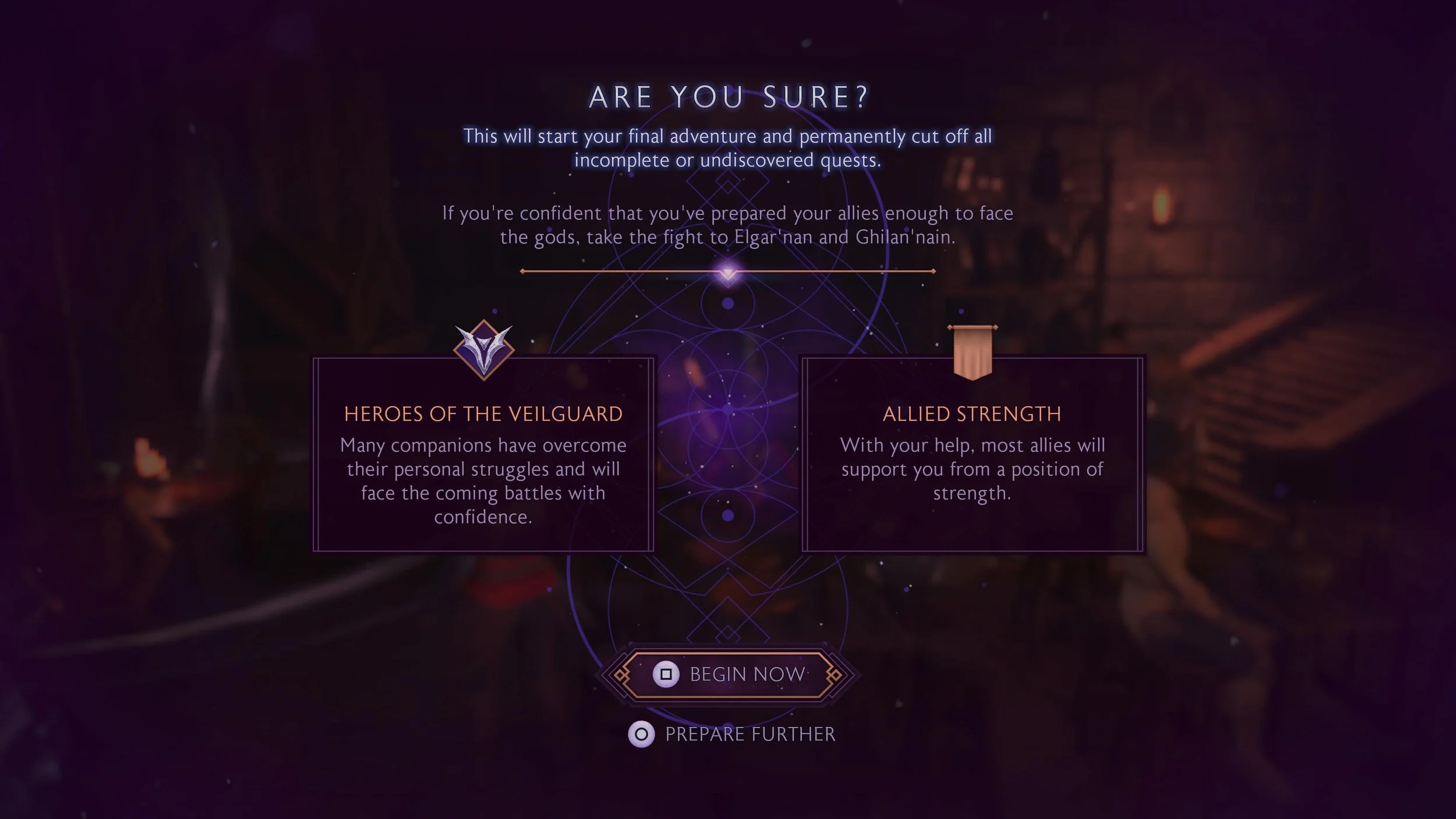
But this is where the lack of meaningful choice becomes most apparent. In previous Dragon Age games, your decisions could strain relationships with companions, leading to rivalry, confrontation, or even their departure from your party. Those moments added tension, realism, and consequence.
In Veilguard, those options simply don’t exist.
The Choice That Was Removed
Which leads to the most important choice that was removed from Veilguard: consent.
Romance has always been a major draw in BioWare games. As far back as Origins, players could pursue, reject, or end relationships. Sometimes those relationships ended because of the other character’s choices, often in ways that were genuinely heartbreaking (iykyk). DA2 and Inquisition expanded on this, allowing players to explore multiple connections before committing.
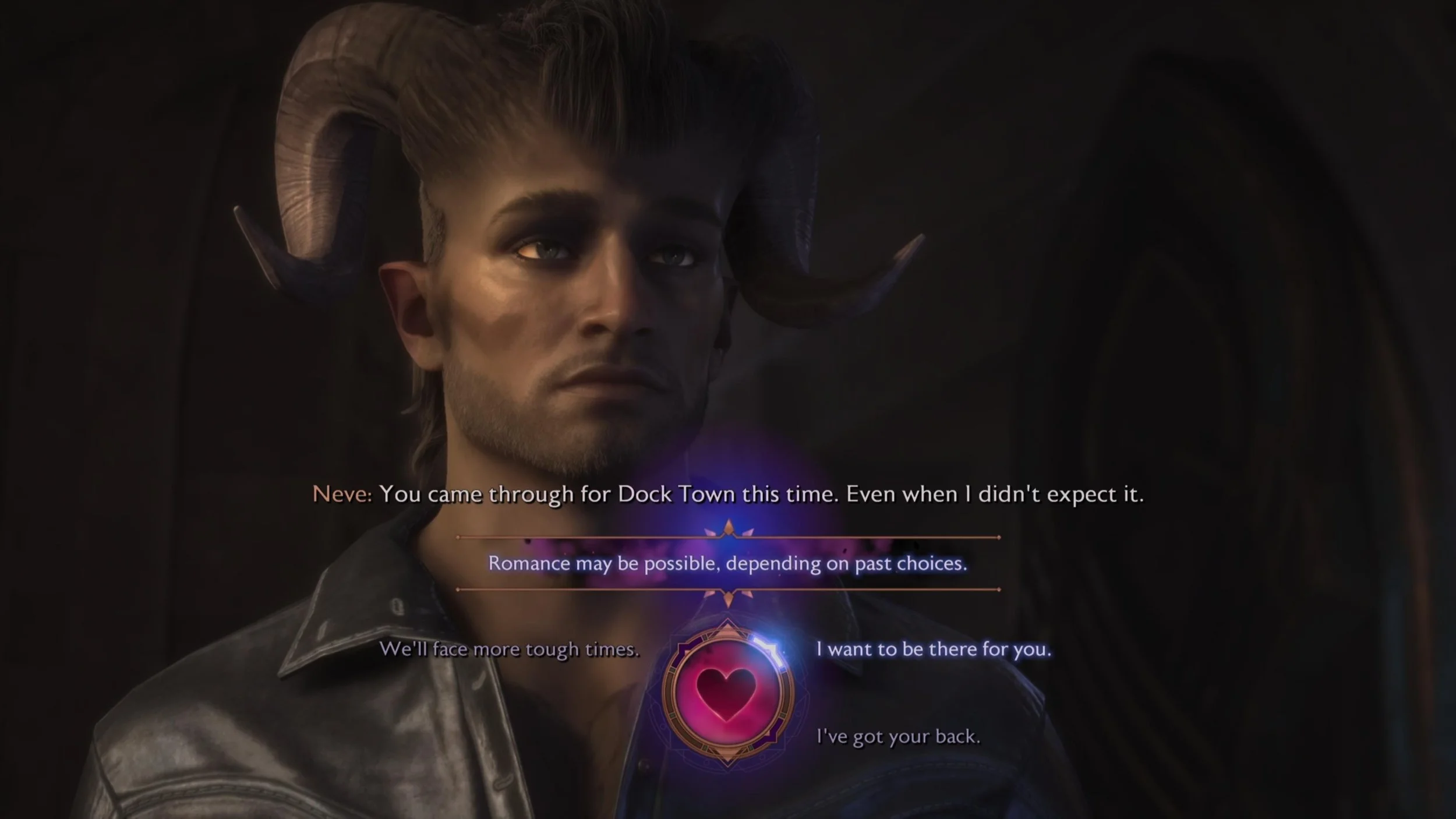
To say the romances in Veilguard feel lacking is an understatement, especially compared to its predecessors. The quality also varies significantly. Emmrich stands out as having the most developed and satisfying romance arc, complete with additional scenes and interactions. Others, like Davrin, Neve, Taash, and Harding, have solid foundations, while Bellara and Lucanis feel noticeably less developed and lacking depth.
But regardless of quality, all of them share the same fundamental issue. Once the player selects the option that explicitly states “this will begin a romance with [character],” there is no opportunity to redefine or end that relationship. From that moment on, Rook is locked in.
A Scene Without Agency
This becomes most evident during the game’s primary romance scene (minor spoilers ahead).
No matter who you romance, the scene occurs at the same point in the story after a major turning point leading into the final act. Rook has been betrayed, isolated in the Fade, and forced to confront devastating truths. They emerge from that experience having lost allies and faced their deepest regrets.
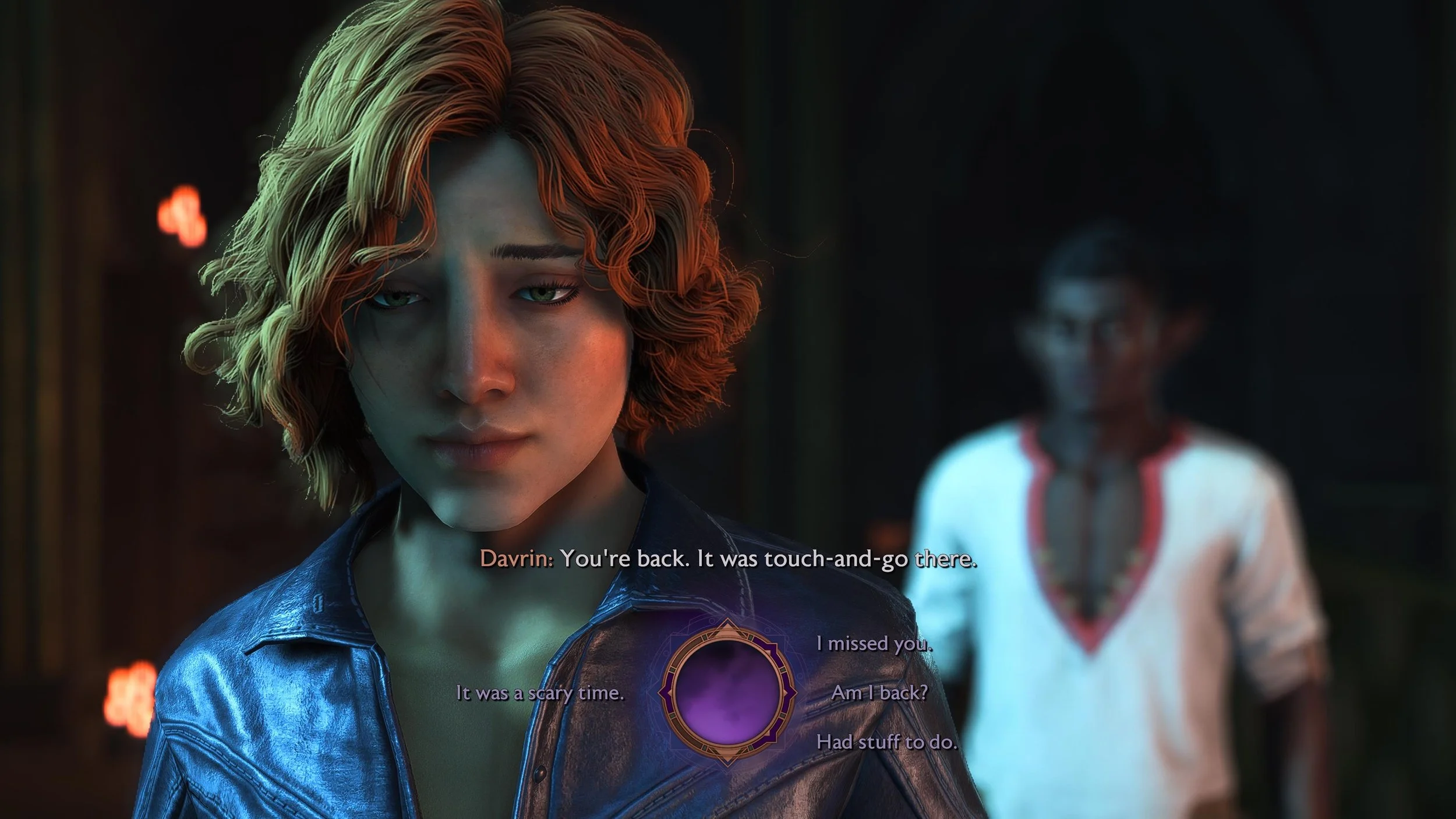
This is totally the face of someone feeling flirty.
After being rescued, Rook regroups with the team and prepares for the final confrontation. Their chosen love interest then visits them in their chambers (which, notably, still only contains a chaise rather than a bed).
There is a brief moment of emotional grounding, which involves a conversation acknowledging fear, loss, and the possibility that Rook might not have returned. But almost immediately, the tone shifts into flirtation. In my first playthrough I romanced Davrin, and this tonal shift felt especially jarring. The transition from “I thought I lost you” to “look at these abs” happened so quickly that it undercut the emotional weight of the moment.
The scene itself is well-intentioned, tasteful, even sweet. It ends with a quiet conversation that should feel meaningful. And yet something about it felt off.
It wasn’t until later that I realized why: at no point was I given the option to say, “No. Not right now.”
Why That Choice Matters
People process grief and trauma in different ways. Some seek closeness and physical comfort. Others need space, time, or silence. In that context, the ability to consent, to choose whether or not to engage in that moment, should have been essential.
Looking back at previous Dragon Age and Mass Effect titles, players are consistently given that choice. Whether the response is gentle, humorous, or blunt, the option to accept or decline intimacy is always present.
That’s what makes Veilguard’s omission so surprising. This is the most recent entry in a series built on player agency, yet it removes one of the most personal and meaningful forms of choice. And in doing so, it highlights a larger issue: Veilguard doesn’t just limit player choice. It quietly decides which choices matter, and which ones don’t.
For a series that built its legacy on the idea that your decisions shape the story, this absence feels particularly significant. Because when even something as personal as consent is no longer a choice, it raises a larger question about what kind of story Veilguard is trying to tell and how much of it truly belongs to the player.
Images are used under fair use for commentary and analysis. All copyrights remain with their original owners.
