
Dragon Age: The Veilguard — Where the Story Loses Its Way
Spoiler warning for the entire Dragon Age series! If you’re still playing, come back later.
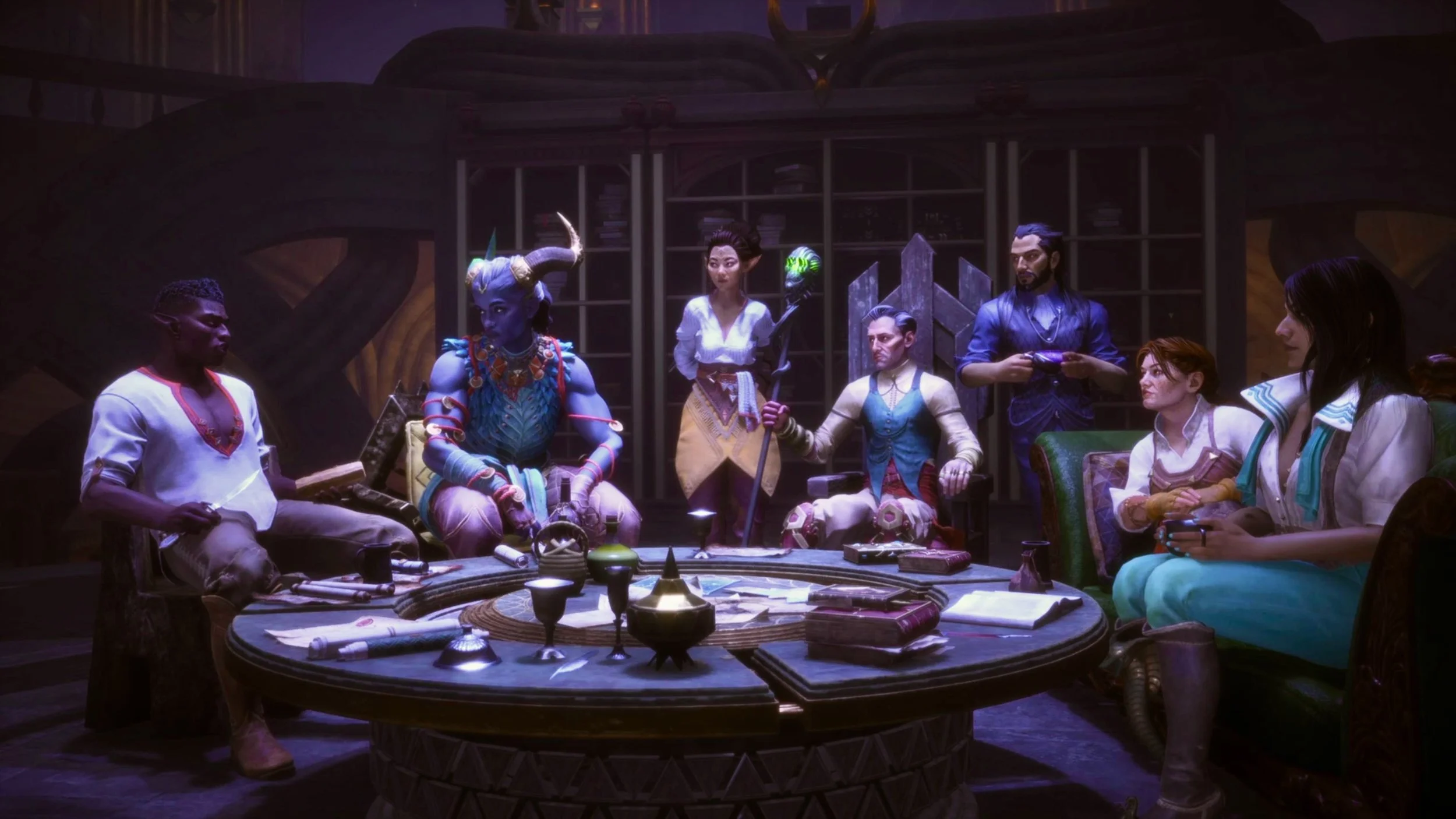
Before diving into my analysis of how Dragon Age: The Veilguard disappoints from a story perspective, I want to reiterate that I do not hate this game. It has enjoyable action, a few compelling characters, important themes, and other strengths that I touched on in part one of this series.
So I’ll say it again: DAV is an entertaining RPG. It simply is not a strong Dragon Age game.
A Hollow History
My main critique is that DAV fails to honor the lore and characters that came before it.
I avoided spoilers and trailers for this game. All I knew was that it was meant to continue Solas’ story from the Trespasser DLC, and that the title had changed from Dreadwolf to The Veilguard. Shortly before release, I looked up how to import my world state from the previous games. That was when I was devastated to learn just how little my past choices mattered. Veilguard only asks about who my Inquisitor romanced, what happened with the Chantry, and what their relationship with Solas was. That was deeply disappointing.
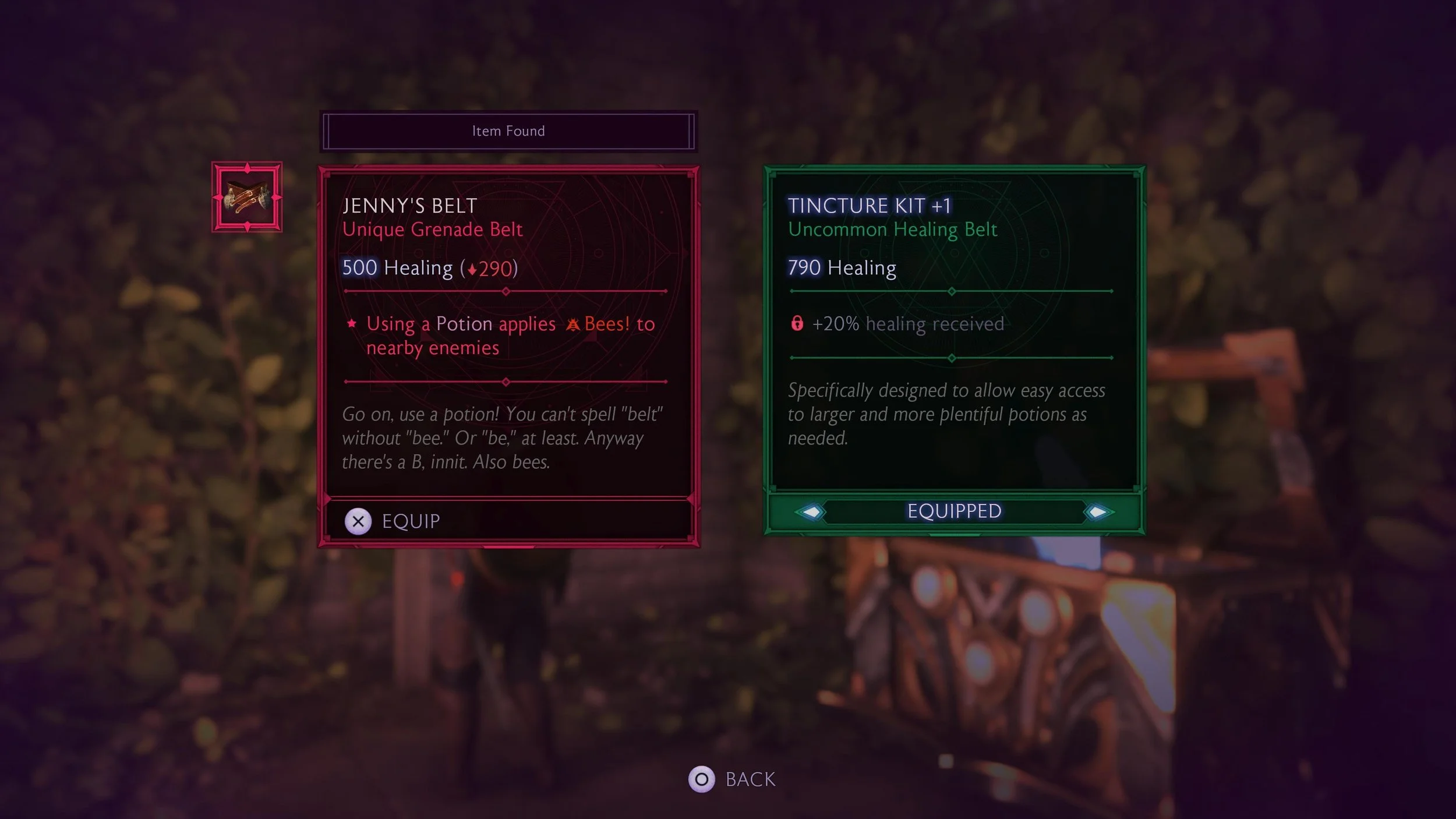
After roaming every corner of Treviso and solving random puzzles, I got far too excited over a Sera/Jar of Bees reference.
The beauty of BioWare series like Mass Effect and Dragon Age has always been the ripple effect of your choices from one game to the next. Yes, there are the occasional major decisions that determine a companion’s fate, but I’ve always loved the smaller moments too, seeing messages from former companions, references to old allies or enemies, and little glimpses of how past choices shaped the world for better or worse.
I wasn’t exaggerating in my previous article when I said this was the only game I’ve platinumed. I went through every area trying to find even the smallest reference to returning characters or past decisions. There were so many opportunities.
We go to Weisshaupt, and there is not a single mention of the Hero of Ferelden or Alistair as Grey Wardens. Even a letter would have done the trick. Or if Alistair and the Hero of Ferelden became king and queen, surely there could have been some reference to the efforts they were making while southern Thedas was apparently burning and overrun by darkspawn.
We spend time with the Antivan Crows, and there is not a single mention of Zevran from Origins. I understand he was never the most powerful figure within the Crows, but they cared enough to hunt him for years. No, I was not expecting a full-blown Zevran cameo… though I certainly wouldn’t have objected. But there could at least have been a codex entry or a scrap of paper referencing him if he survived and helped the Warden all those years ago.
Merrill from Dragon Age II would have been another easy connection to the Veil Jumpers, especially given how important elven history and culture were to her character. She spent an entire game trying to restore an Eluvian, and now Rook is hopping through them with ease. Poor Merrill.
But there are two characters whose absence I genuinely cannot forgive.
The first is Cremisius aka “Krem” from Inquisition. A proud warrior and loyal member of Bull’s Chargers, Krem was a standout character who survived immense hardship after being outed as transgender in the Tevinter military and forced to flee. Yes, there is an outcome in Inquisition where Krem can die, but there are so many ways to write around that. His death happens offscreen. It would have been easy to create a scenario where Iron Bull helped him disappear and start a new life, only for him to reemerge in Veilguard wanting to challenge the injustices of his homeland. He could have been a powerful ally in Tevinter, an excellent addition to Rook’s team, and a deeply meaningful connection point for Taash’s journey of self-discovery.
And then there’s Fenris.
An escaped Tevinter slave from Dragon Age II, Fenris gave us one of the clearest and most personal looks at the horrors of the Tevinter Imperium through his past with Danarius. The fact that Isabela of all people returns in Veilguard while Fenris is nowhere to be found is baffling to me. Fenris could have been a pivotal emotional anchor in a story set so close to Tevinter’s abuses of power. He could have reflected on his time with Hawke, his evolving perspective, and the brutal realities of magic and control within the Imperium.
Instead, much of what we get through Neve and the Shadow Dragons feels narrower than it should. The focus stays largely on blood magic and the Venatori, and for me, Neve’s constant noir detective framing wore thin fairly quickly.
A Lonely World
Speaking of teammates, being part of the titular Veilguard feels like a strangely isolating experience for Rook.
This was one of those things I felt throughout the game, even before I could fully articulate it. Rook never truly feels like part of the group. They feel separate from it, working as the mediator, the manager, the person responsible for keeping everyone else functioning. Which is wild, because Rook also feels like the least qualified protagonist I’ve ever played in a BioWare game. Even when I’ve played an actual commander, I at least felt secure in the knowledge that my team had my back.
Here, it often feels as though the game goes out of its way to make Rook an outsider.
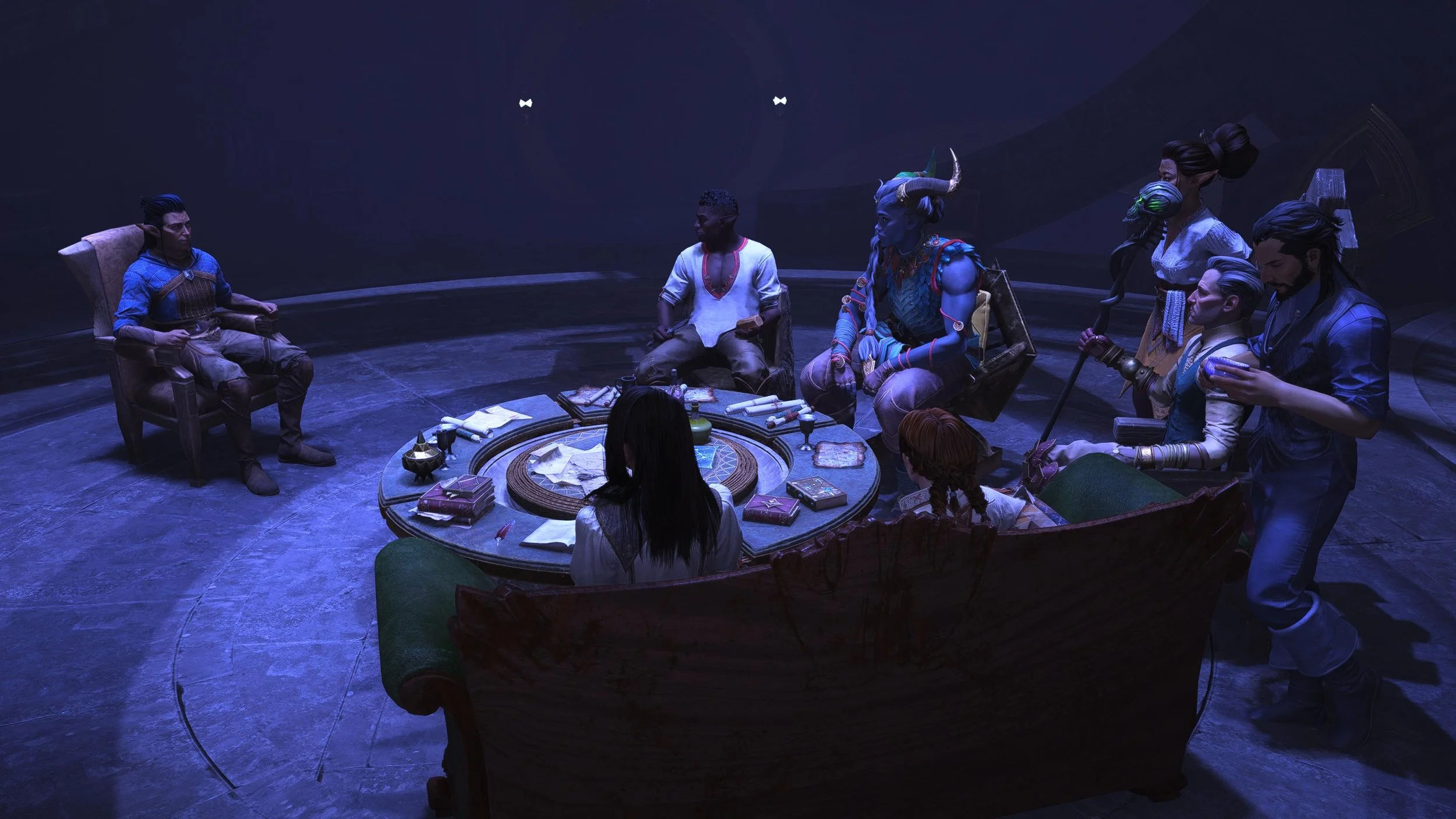
Seriously guys, why is my chair so far away from everyone?
We find letters about book clubs and cooking lists where the entire group has contributed, yet Rook is never mentioned. You lose the ability to casually interact with companions whenever you want, and can only speak to them when a quest or cutscene becomes available. Otherwise, you are left wandering around the Lighthouse, overhearing private conversations that abruptly stop the moment you approach, with everyone staring at you awkwardly because, yes, you were just eavesdropping.
I understand there are “important” plot elements that some players might argue explain this feeling of isolation, but I’ve replayed the game multiple times with that in mind, and it still doesn’t work for me. More on that in a later article.
For a series that once thrived on building meaningful party dynamics and emotional connections between companions, this makes DAV feel especially hollow.
A Lack of Conflict
The final element that disappointed me was the genuine lack of conflict.
And I don’t mean conflict in the broadest plot sense. Yes, the story has obvious villains bent on destroying the world and one ambiguously tragic bald elf doing his best Loki impression in the background.
The issue is that there is so little friction within the world itself, within the companions, and especially within Rook.
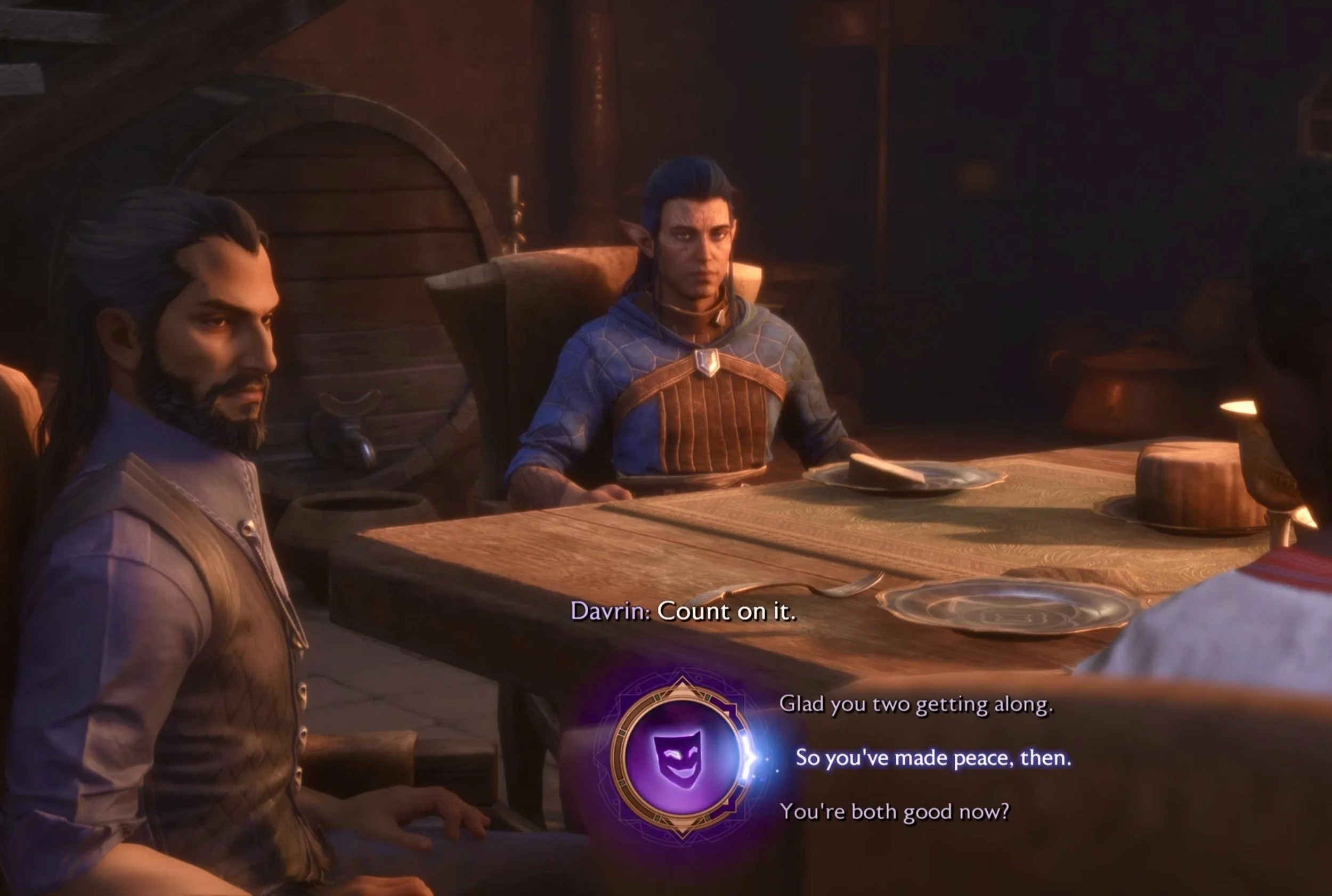
It is true that Davrin and Lucanis have a feud going on throughout the game, and Taash is blunt by nature when interacting with other companions. But those details feel shallow. In previous Dragon Age games, you could make choices that angered companions, pushed relationships to the breaking point, or even caused people to leave your team altogether. In Veilguard, almost everything feels smoothed over. You can’t choose sides, call someone out, or tell them to get over it and focus on the fact that the world is literally ending. Your dialogue options are generally some variation of polite supportive, jokey supportive, or serious supportive. That is usually the full extent of Rook’s personality.
And I say this as someone who almost always plays the nice route first. But when a game removes the possibility of being rude, harsh, or genuinely divisive, being kind loses some of its meaning. You lose the moments where compassion feels like a choice rather than the default. You lose the possibility of pushing a character too far. You lose the payoff of that occasional 10% “Renegade” decision when the situation actually calls for it.
It also weakens replayability. I’ve completed multiple playthroughs with different races and backgrounds, yet my Rooks all felt like fundamentally the same person.
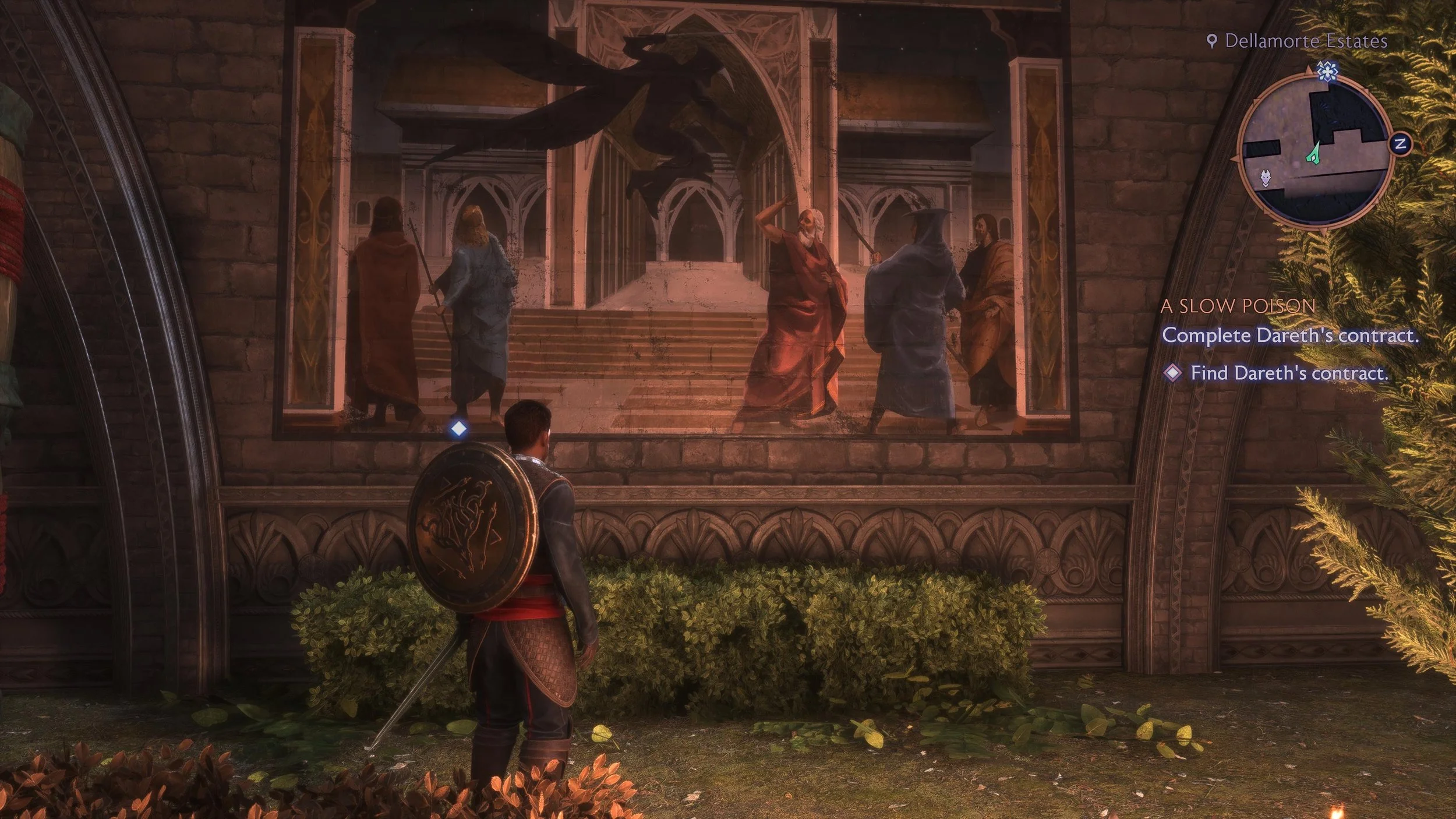
Not me checking every painting going, “Zevran, is that you?”
That same lack of friction extends to the factions and the worldbuilding. Earlier games showed us the darker side of the Antivan Crows as an organization that recruits orphans and trains them to kill in a ruthless environment. Yet in Veilguard, the Crows are presented almost like charming vigilantes. We are never truly invited to question their methods or the power they wield. In fact, the game seems eager for us to applaud a “gifted” young recruit working his way up through the ranks. Yet another reason Zevran’s absence feels like such a missed opportunity.
The same goes for the Lords of Fortune. The game bent over backward to reassure us that this group of pirates treasure hunters always returns every artifact to its rightful culture of origin. It felt less like worldbuilding and more like the game nervously trying to preempt criticism.
I could go on, and rest assured, I have at least two more DAV articles in the works, but it all comes back to one thing:
The tone feels off.
It’s as if the developers couldn’t decide whether they wanted a lighthearted adventure romp or a dark fantasy tragedy. One moment, we’re told that all of southern Thedas is being ravaged by the Blight. The next, Emmrich and Harding are planning a cheerful weekend camping trip.
The game feels the need to hold your hand through the story in ways that are, at times, both condescending and exhausting. That for some reason they have “mini summaries” after every major companion quest that repeats what we just experienced and manages to spoil hint at what’s to come. And that doesn’t include when characters then have to sit around and discuss what just happened. It’s as though the developers were afraid to let players experience the story organically.
In addition, beloved characters like Lace Harding seemed to undergo a personality regression, acting like a teenager compared to the reliable scout we knew in Inquisition, which was set 10 years prior. Plus, she was given paragon-level rock abilities that she somehow never uses in combat or during a very important crucial moment. Another example of wasted potential and uneven tone.
But for me, no missed opportunity illustrates that more clearly than the way Veilguard handles one particular character choice that could have changed the emotional weight of Rook’s entire story. Stay tuned for more!
Images are used under fair use for commentary and analysis. All copyrights remain with their original owners.
