
Keeping It Real: Finding Stories in Reality TV
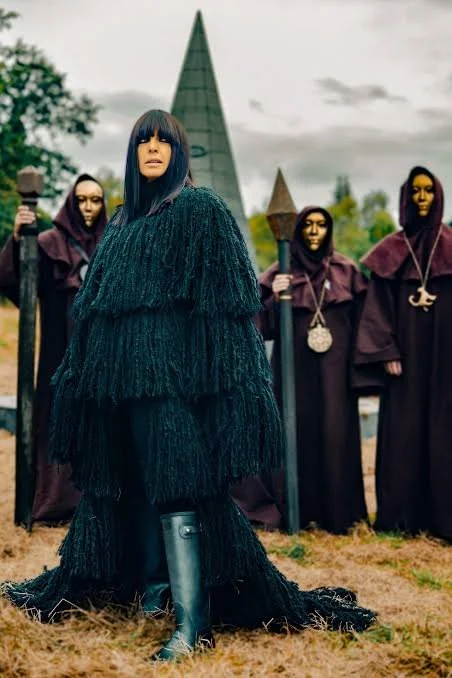
The mystique. The drama. The fashion. The creepy masks. UK Traitors has it all.
Reality TV. What does it mean to you? For some, it’s a guilty pleasure. For others, it’s a hate watch. And for the vast majority, it makes up a large portion of the media content they consume. What’s the appeal? Whose reality is being portrayed?
Admittedly, I am not the target audience for most reality television. I’ve never been one for superficial drama, cruel tactics, or forced romance dynamics. I know they have their appeal, but I’ve never seen an episode of The Bachelor/Bachelorette or Survivor (though I have completed a Survivor-themed escape room, does that count?). I will admit, I was naive and taken in by Love Is Blind’s premise when it first came out and thought I might actually be witnessing a dating show built on genuine, meaningful connections and not looks… and then I watched the show.
I’ve never kept up with any Kardashians or Real Housewives. I don’t tune in to The Voice or The Masked Singer. But the great thing about reality TV is that there is literally a facet for everyone if you know what to look for.
Far too often, I realized I had to hide or excuse my interest in certain reality shows, using the “guilty pleasure” line from earlier. But no more. I’m going to celebrate the reality shows I enjoy and identify what makes them so appealing. Ironically, I even mentioned one of these shows in the very first article I ever posted. Hopefully, you might find something to enjoy as well.
Reality Based on Genuine Skill
I realize that the majority of the reality shows I love center around people sharing a skill or hobby they are passionate about. And you’re going to see a theme here: I honestly just have a preference for how international reality and competition shows are edited and presented.
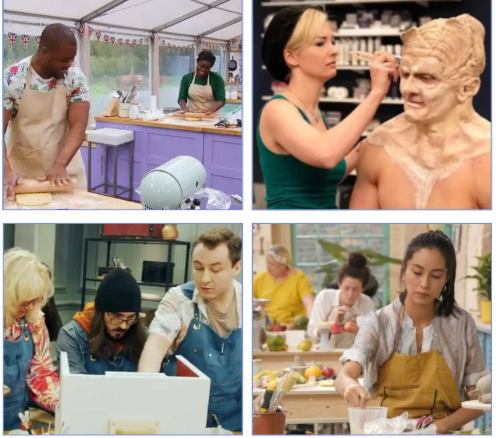
Clockwise: Bake Off, Face Off, Big Tiny Design Challenge, Pottery Throw Down
The Great British Bake Off is the ultimate comfort watch. Watching talented bakers complete increasingly elaborate challenges while the judges and hosts somehow manage to make even the inevitable disasters feel charming is exactly the kind of low-stakes competition I enjoy. You can smile over a perfectly risen sponge, a celebratory handshake, or the kindness of contestants who step up to help a baker who is scrambling at the last minute.
The Great Pottery Throw Down follows a similar formula, only with clay instead of cake. There’s something incredibly satisfying about watching people transform a lump of clay into something beautiful, especially when you know there’s a very real possibility that the entire thing could collapse at any moment or that the head judge will get emotional and tear up over the curve of a vase.
The Great Big Tiny Design Challenge takes that creative competition into the world of miniature design, challenging contestants to create tiny spaces with an impressive amount of detail. Apparently, I enjoy watching people build things that are approximately the size of my patience for most reality television. Also, the show throws in gorgeous shots of the English countryside alongside mini history lessons about different design styles. What’s not to love?
And then there’s Face Off. No, not the bizarre action thriller featuring Nicolas Cage and John Travolta swapping faces. This was a SYFY reality show based on prosthetic makeup artists creating amazing creatures, characters, and special effects. Watching the contestants transform their creations into elaborate works of art for the worlds of fantasy and science fiction was easily one of the biggest draws for me.
Reality Based on Competitive Spirit
Yes, technically the shows I listed above were also competitions, but they were quieter, gentler approaches to competition. Less cutthroat. Well, except for Face Off. Those artists could get pretty intense.
The shows I wish to focus on now center more around the spirit of competition than a celebration of a creative passion. The participants clearly are there with a goal to conquer, and the narrative builds around stories of triumph and defeat, comebacks, alliances, and even betrayals.
Physical: 100 takes physical competition to an almost absurd level, bringing together contestants with different athletic backgrounds and putting their strength, endurance, and strategy to the test. Do I watch sports in my spare time? No. Do I attend live sporting events to cheer on my favorite athletes? Hardly ever. Do I get attached to athletes across the world in competitive fields I’ve had no previous interest in when presented in a high-stakes competition with a great production purely designed to promote a nation’s peak athletic talent? You bet.
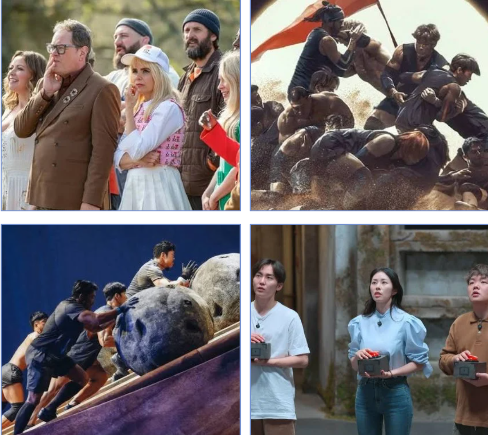
Clockwise: Celebrity Traitors UK, Physical Asia, Physical 100, The Devil’s Plan
Physical: Asia takes that concept and expands it into an international team competition for multiple nations, adding another layer to the individual challenges. Suddenly, it isn't just about proving yourself; you're carrying the expectations of an entire country. It probably says more about me that I was more invested in the outcome of this competition than the recent Olympics… please don’t judge me.
The Traitors UK moves away from physical competition entirely and into strategy and deception. Contestants must determine who among them is secretly working against the group while trying to survive long enough to win the prize. It's essentially an elaborate exercise in figuring out who you can trust, which is probably why I find it so entertaining. One element that I particularly like is that despite the constant uncertainty of who is a Traitor or a Faithful, there are daily challenges that everyone must work together to solve, so there’s still an element of camaraderie. Also, special shoutout to Celebrity Traitors UK for highlighting wonderfully entertaining people buying into the game without subverting into rude tactics or clout chasing. I get it makes a difference when most of the contestants already know one another and they’re playing for charity rather than personal prize money, but still, so enjoyable.
And then there’s The Devil’s Plan, which may be the closest any reality competition has come to scratching my particular storytelling itch. The contestants are brought together to compete in a series of increasingly complicated games involving logic, strategy, alliances, and deception. Watching intelligent people figure out how to navigate both the games and one another is half the fun. Season 1 brought together a great group of people from different backgrounds, building a story around who deserves to survive: the elite mental players or those willing to work together. It brought up some interesting dynamics. While I still enjoyed Season 2, I think it leaned too heavily on forced drama and literal class divides, where one bad turn early on would basically hinder a player for the rest of the season. It was still enjoyable, and the games were interesting, though they started to rely too much on alliances, making the season feel more produced.
Reality Based on the Heart
This is the category that I’m the most wary of with reality TV, yet it is the one that has so much potential. But as I said, I know I’m often not the target audience since I would prefer a dating show that wasn’t based on hotness, where people just talked to one another and made meaningful connections, sight unseen, for several weeks and then decided if they cared enough to get to know one another in person—without the insane pressure to marry a complete stranger in two weeks just to make some money.
Have I mentioned how disappointed I was in Love Is Blind?
That being said, there are a couple of dating shows that I genuinely enjoyed.
Offline Love seems to be close to what I wish dating shows were more like, to a degree. Though when watching it, the show plays out more like a heartful drama more than reality show, which is part of the appeal. To be honest, the main draw of this show is how gorgeous the scenery is. One thing I’ve noticed about the few Asian dating shows I’ve seen is that they don’t focus as much on physical intimacy as their Western counterparts. Do I think everything is highly edited and dramatized for beautiful storytelling? Absolutely. Do I prefer that over superficial drama and drunken yelling? Absolutely.
Love Is Blind: Japan is my favorite version of Love Is Blind, and is closest to what I hoped the show was actually trying to be. Yes, there are a few participants on there for clout or exposure, but for the couples that do match up, they do seem to make a concentrated effort on determining whether or not the other person is someone they wish to make a serious commitment to. I prefer the slower-paced format of this show compared to the others I’ve tried to watch, and of course, it’s the only one not to get renewed.
Facing Reality
In the end, enjoying shows like these or whichever ones catch your fancy, can offer a similar appeal to fictionalized stories. Whether you seek drama, intrigue, triumph, or comfort in the world of reality television, there’s an opportunity for all on a myriad of levels. You can follow the story of lonely software engineer who recently turned to baking as an outlet, only to find themselves on a global stage. Or the retired athlete, looking to prove that age doesn’t mean you give up or fade away. Or the young hopefuls searching for love in a beautiful retreat, who may also be hoping their modeling or influencer career picks up after this.
They all offer different paths that could be pursued, offering sources of inspiration, caution, sometimes even cringe. As viewers, we can take on the mantle of encouragers, analyzers, or even play the self-insert role, seeing what could be possible for us if we decide to take a leap in our own stories. So I say toss aside the mantle of “guilty pleasure” and simply enjoy the story playing out.
Images are used under fair use for commentary and analysis. All copyrights remain with their original owners.
