
Stray Gods: Seeking the Rhythm Between Gaming & Music
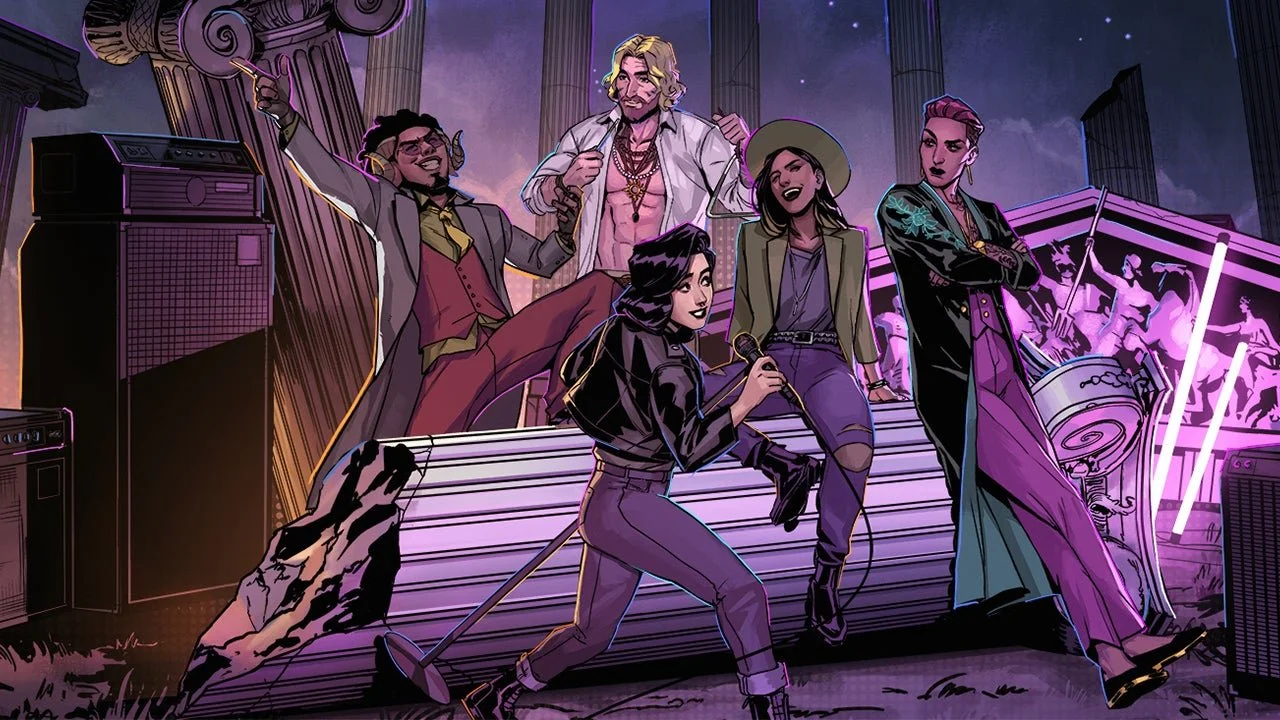
After spending the last few weeks revisiting the musical world of Crazy Ex-Girlfriend, it seemed like the perfect opportunity to revisit a video game with its own musical story to tell. Enter Stray Gods: The Roleplaying Musical.
When I first discovered this game nearly a year ago, the reason shouldn’t be surprising. A single cursory glance at my blog history will reveal that I am quite the Dragon Age fan. So of course I was invested when I heard that David Gaider, the former lead writer behind the lore and creator of some of my favorite characters in the Dragon Age franchise, had written a new indie video game. Especially after knowing he left BioWare before Dragon Age: The Veilguard was developed, and frankly, as my previous posts reveal, the absence of his world-building skills is keenly missed in that game.
Since it had been a year, I decided to replay Stray Gods to remind myself of the story, characters, and core components. As the title may suggest, it’s a game where you take on the role of Grace, a gifted singer trying to find her place in the world despite often feeling adrift. Grace’s life is turned upside down when she is suddenly granted the powers of a Muse, a Greek god who has the ability to convert everyone’s innermost thoughts and emotions into song to uncover hidden truths.
A Musical Mystery
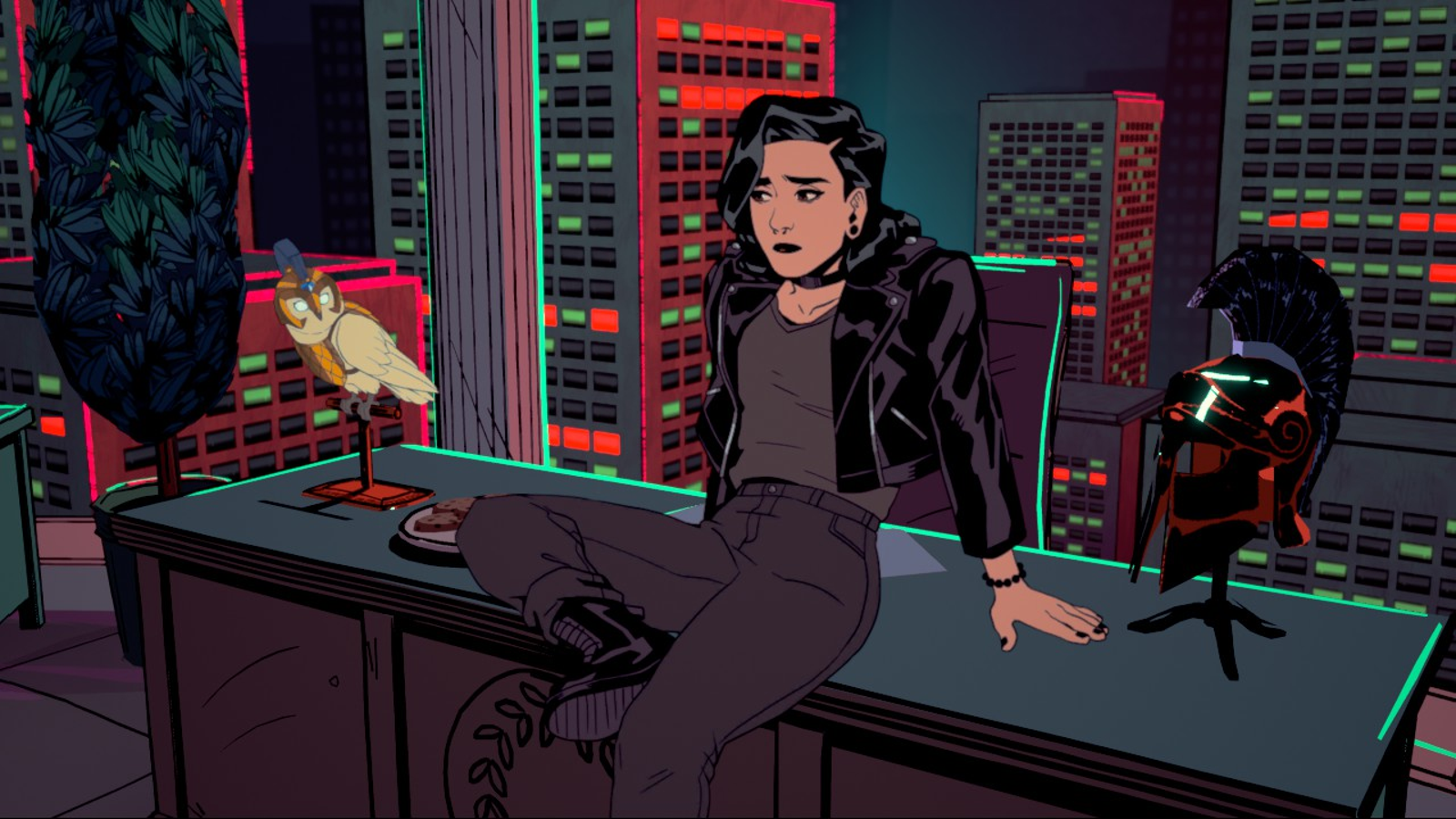
“So you’re probably wondering how I got into this mess. What’s this owl’s problem? Well, let me sing you all about it…”
The story of Stray Gods follows a clear three-act structure, with Grace becoming entangled in a murder mystery surrounding the death of a god, where she quickly finds herself the prime suspect. Thrust into a world she doesn’t understand, she must learn to utilize her powers and uncover the truth before her time runs out. During her search, she has the opportunity to interact with a range of characters from the Greek pantheon, including Apollo, Athena, and Aphrodite. The deeper she digs, the more Grace finds herself tangled in secrets, regrets, and wounds that have festered among the gods for thousands of years.
As Grace, players are invited to utilize a set of skills in conversations and song, choosing whether to be charming, clever, or badass. To be honest, this game feels more like an upgraded visual novel than a traditional RPG. The scenes are animated in a graphic novel style, and the player only directly controls Grace’s choices. Because I knew of Gaider’s connection to Dragon Age and its wonderful implementation of choices and consequences, that was my primary draw in giving Stray Gods a chance.
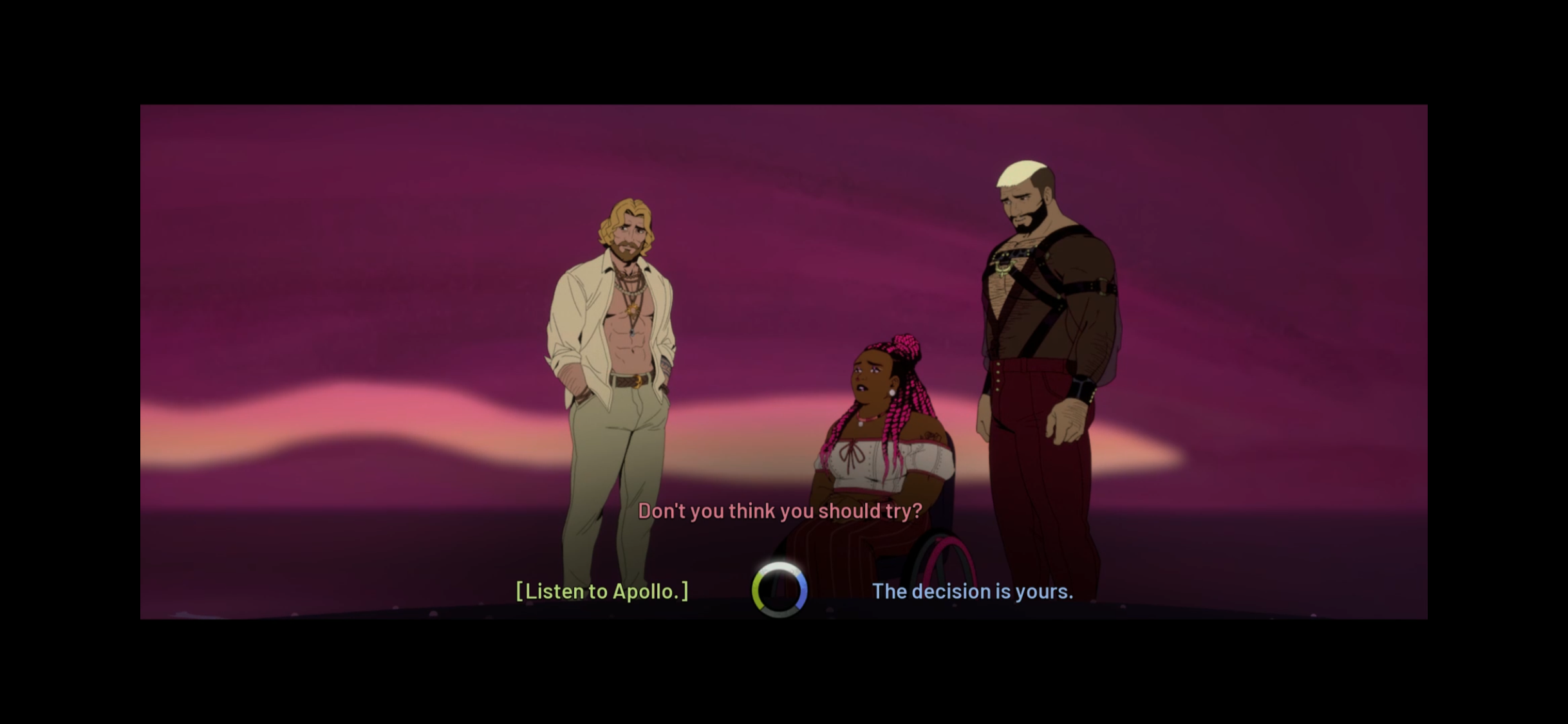
While choosing a distinct personality trait does unlock specific dialogue choices at times, conversations often felt fairly linear in their outcomes. Aside from a character occasionally becoming annoyed or approving of Grace’s response, the overall results rarely changed in significant ways. Where choices truly seemed to matter was during the songs, when Grace channeled the gift of the Muse. Here, it was genuinely impressive to see how much work was put into crafting different melodies, lyrics, and animations depending on the direction the player chose. These choices influenced not only Grace’s performance but also the performances of the other characters involved. More importantly, selections made during songs often led directly to major story beats. As the Muse, Grace has the power to shape the emotions and decisions of those around her, choosing who to trust, challenge, support, or condemn. Each choice creates a ripple effect that influences not only the lyrics and melodies, but also the relationships and outcomes that follow.
When Choice Becomes Music
Admittedly, I only completed one playthrough last year, so this time I wanted to dedicate more attention to seeing just how much the songs could branch, since most featured multiple opportunities to change the tone, message, or emotional direction Grace conveyed. Much like last time, the bulk of the game reminded me of my favorite episode of Buffy the Vampire Slayer, “Once More, with Feeling,” where the characters inexplicably find themselves singing their honest thoughts. The songs in Stray Gods have a similar quality. Many adopt a free-flowing, stream-of-consciousness style that allows characters to reflect on their fears, motivations, and desires, with some songs working more effectively than others.
I wish I could say that I walked away from Stray Gods a second time loving the soundtrack. Unfortunately, there were really only two songs that stayed with me enough that I found myself singing them days later. There were also several individual verses and melodies I enjoyed within other songs, even if the overall number failed to fully engage me. The standout, in my opinion, remains “The Ritual,” which I replayed multiple times just to experience its different variations. The fact that the song can shift so dramatically while still maintaining its emotional core is impressive. It accompanies one of the most emotionally difficult decisions in the game and does a beautiful job reflecting how trauma affects both victims and the people who care about them. “Lost in a moment, lost in a song” became one of my favorite refrains in the entire soundtrack.
Romance and Relationships
While working to solve the mystery and prove her innocence through the power of song, Grace also has the opportunity to romance a variety of characters. Personally, I wouldn’t have minded if these relationships were a bit more involved. Yes, we have to suspend disbelief for a story where Greek gods secretly live among us, but many of the romances felt rushed considering Grace has only seven days to prove her innocence, is suspected of murder, and has valid reasons to distrust nearly every god she encounters. Yet after only a handful of flirtatious interactions, some love interests are ready to commit wholeheartedly.
Like I said, suspend disbelief.
While the romances felt somewhat underdeveloped, I do appreciate that each option had their own unique personality, motivations, and reasons for giving Grace pause. And of course, what musical would be complete if every romance didn’t come with its own song? After exploring all of the romance paths, I still found myself preferring the same choice I made during my first playthrough, with “Here for the Ride” remaining my favorite romance song in all its variations for showing how both people in the relationship were willing to grow together and finding the courage to seek joy.
Final Thoughts
Even though the majority of the soundtrack wasn’t entirely my personal preference, I still recommend this game to anyone who enjoys musicals, visual novels, or Greek mythology to see how Gaider and the composers worked together to blend choices, music, and consequences into an engaging story. As someone who has always been fascinated by Greek mythology, it was interesting seeing familiar figures reimagined through a new lens that offered fresh perspectives on their stories. Fans of The Last of Us, Critical Role, and Rent should also recognize a few familiar voices throughout the cast.
I look forward to seeing more from David Gaider and Summerfall Studios that highlights the power of story-focused, character-driven games that embrace creativity and representation. Stray Gods is a unique experience that uses music to explore themes of grief, trauma, regret, and, just as importantly, hope and perseverance. It presents situations where answers are rarely black and white and allows players to examine multiple perspectives that shape the choices people make. And for me, that’s a story worth exploring.
Music and stories give us safe spaces to explore themes of grief, isolation, and other mental health struggles, but sometimes those emotions reach beyond the screen. If you’re currently struggling, please know that you’re not alone. Resources like Good Grief and National Alliance on Mental Illness (NAMI) can provide support.
Images are used under fair use for commentary and analysis. All copyrights remain with their original owners.
