Stranger Things: Characters, Consequences, and a Divisive Finale
Spoiler warning for Stranger Things.
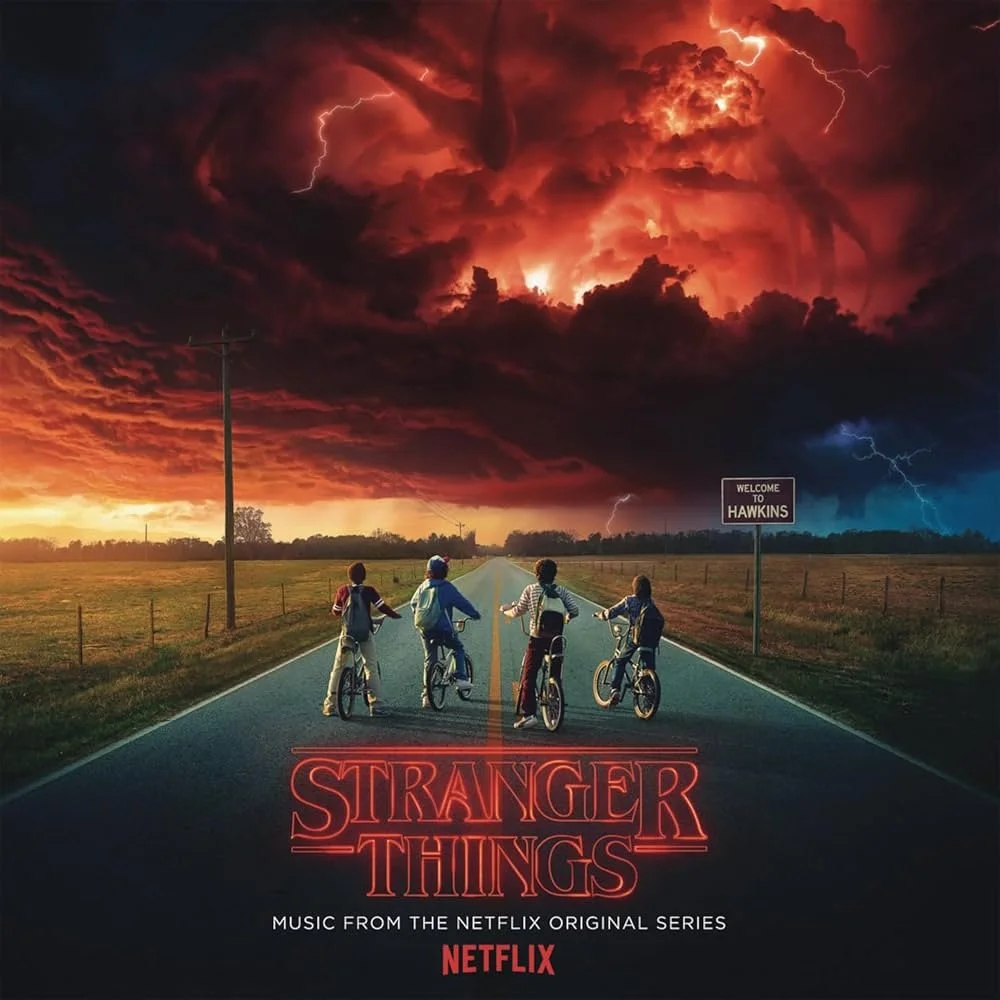
Yes, I know this is for a different season. But it features the final boss design I wished we had seen more of in the finale.
This week marked the end of a unique series that became a cultural phenomenon: Stranger Things.
I’m certainly not alone in saying I was hooked from the very first season. Although I didn’t grow up in the 1980s, I’ve always had an appreciation for stories inspired by that era, particularly the kind of character-driven, nostalgic storytelling associated with creators like Steven Spielberg and John Hughes.
To this day, I still consider the first season a masterclass in storytelling. It introduced a cast of relatable characters while steadily building an atmosphere of eerie suspense. As the series progressed, however, my feelings became more mixed. Before watching the final season, I did a full rewatch and realized that with each new installment, I found myself skimming more and more scenes that failed to hold my interest.
For example, season two’s infamous Chicago episode disrupted the momentum of the main storyline, while seasons three and four leaned heavily on the Russian subplot. While I genuinely enjoyed the Scoop Troop dynamic, much of that storyline felt unnecessary to me and often pulled focus away from the emotional core of the show.
While Stranger Things remains a series I will praise and promote to others, there were a few elements that I wanted to analyze a bit deeper.
Key Character Moments in the Final Season
Dustin’s Graduation Speech: When Speaking Out Falls Flat
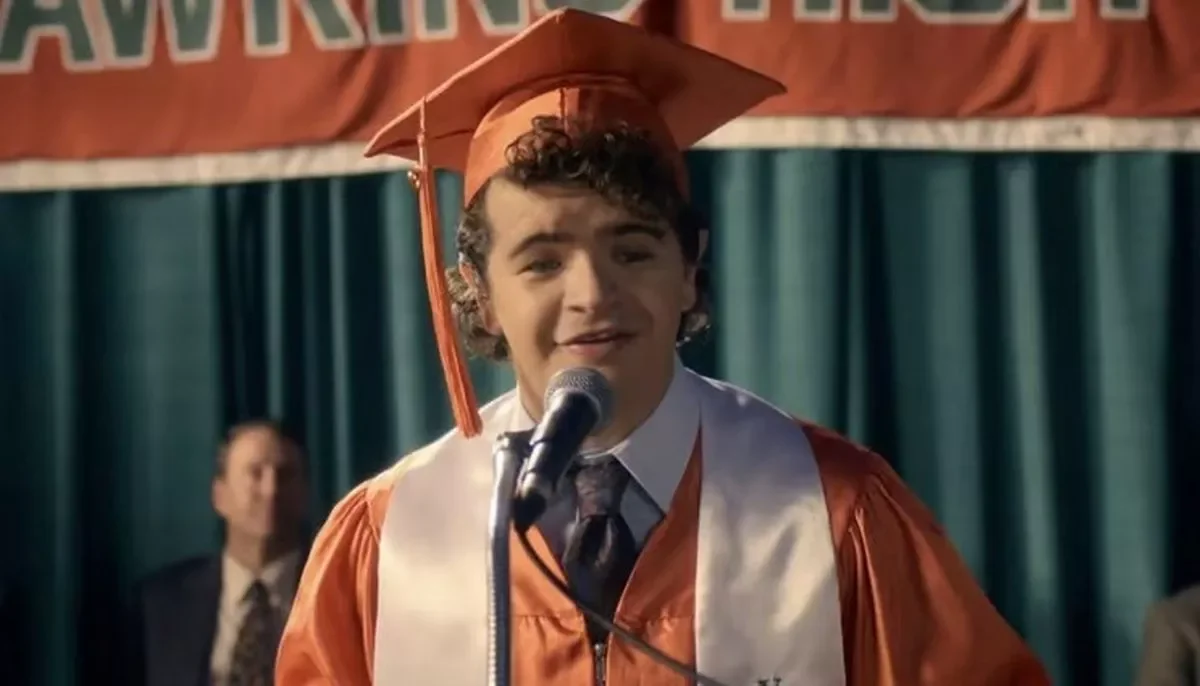
“As we go on, we remember, all the monsters we fought together…”
The epilogue of the story features our core party members attending their high school graduation, with Dustin as the valedictorian. Dustin’s graduation speech was clearly intended as a tribute to Eddie, but for me, the moment didn’t quite land. His public condemnation of the school administration and celebration of nonconformity felt emotionally disconnected from what we’d actually seen on screen. As viewers, we had very little interaction with the principal throughout the series, leaving Eddie’s declaration in season four as our sole reference point.
Personally, I think the speech would have been far more powerful if it had focused on the bonds formed during youth, such as the friendships, memories, and losses that shape us. A message about continuing forward while honoring those they’ve lost could have resonated deeply, not only with Dustin’s grief over Eddie, but also with Mike’s loss of El and the collective trauma experienced by the students of Hawkins, even if they never fully understood the truth behind it.

I’ve seen some viewers argue that Dustin was justified in calling out the school for its role in Eddie’s treatment. While I understand that perspective, it didn’t fully align for me. The basketball team’s violent pursuit of Eddie occurred during Spring Break, and the blame lies far more with the police who failed to intervene than with the school administration itself. From the perspective of the average Hawkins citizen, all they knew was that teenagers were being brutally murdered and the last known person seen with a victim was a high school drug dealer. Suspicion, while tragically wrong, wasn’t implausible.
Did Eddie deserve a fair trial in a situation where the odds were stacked against him on a near-cosmic level? Absolutely. But that distinction is something only the audience, and the core Stranger Things party, truly understands.
Ultimately, the speech felt like a misdirected lecture rather than a celebration of the people who quietly supported these kids for years, such as Mr. Clarke. It also highlighted how disconnected Dustin has felt from the original party since season three. While grief and growing up naturally cause friendships to shift, Dustin’s increasing separation, due to often being paired with Steve and Eddie, made his central moment at graduation feel emotionally disjointed rather than cathartic.
The Art of Villainy: Henry/Vecna
Several ideas introduced in seasons four and five, particularly regarding Henry Creel, were never fully paid off in the finale. One of the most compelling aspects of Henry’s character was his ability to exploit people’s deepest fears as a form of manipulation. This was executed beautifully in Season 4 through Max’s confrontation with her grief and guilt surrounding Billy’s death.
By contrast, Will’s experience in Season 5 felt underdeveloped. Rather than witnessing Henry prey on Will’s fear of isolation and abandonment, we’re simply told it happened off-screen, which is especially frustrating given how visually explicit the show was willing to be elsewhere.
Henry’s manipulation of Will ultimately leads to a pivotal moment where Will decides to face his fears and come out to his family and friends. While Robin’s encouragement plays an important role, the true catalyst is Will’s refusal to let Henry maintain power over him. Given that setup, it feels reasonable to expect Henry’s psychological warfare to be a central threat the characters must confront.
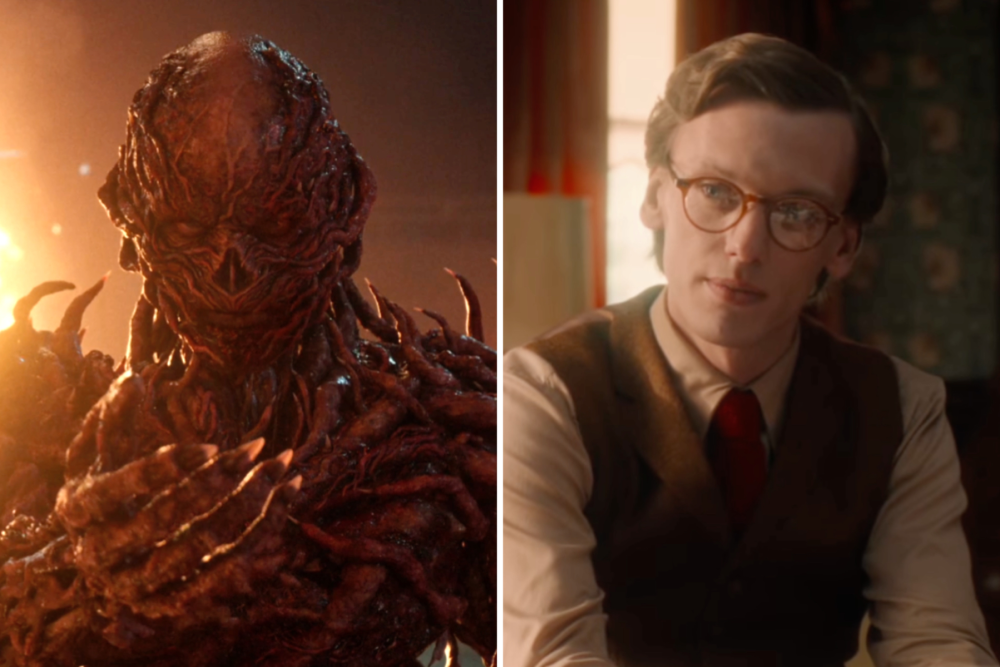
We glimpse this potential in a powerful scene between Henry and Hopper, where Hopper’s fear of losing El is weaponized against him. This kind of emotional and psychological battle is exactly what I expected to be prevalent throughout the finale, with Henry/Vecna creating confrontations that forced each character to face their inner demons and demonstrated how far they’d come.
Instead, the final conflict centers on a kaiju-like Mind Flayer battle where the stakes never felt truly personal, and I never believed the core characters were genuinely at risk.
All of this is a long-winded way of saying that Henry was robbed of a more impactful villain arc in the finale. That said, credit where it’s due: Jamie Campbell Bower was phenomenal. His emotional range, particularly during Henry’s origin and memory sequences, was the highlight of the finale for me. His interaction with Will where he was offered the opportunity to choose good, but instead stayed true to his motivations was chilling and perfectly in character. He was, quite simply, incredible.
The Best Relationship Dynamic
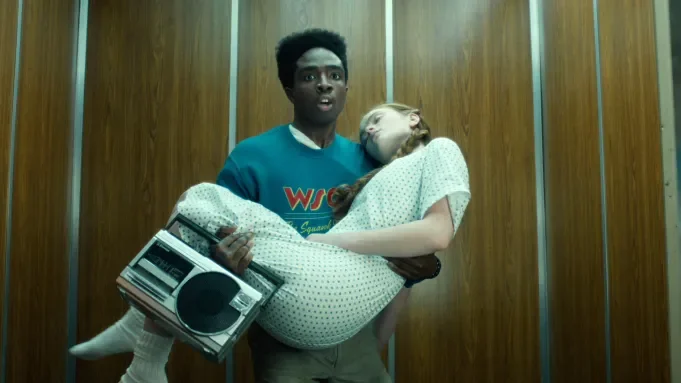
If you had told me ten years ago that Mike and El’s relationship wouldn’t even crack my top three by the end of the series, I wouldn’t have believed you. Yet, without question, the strongest relationship for me was between Lucas and Max.
Caleb McLaughlin and Sadie Sink delivered the most impactful character development and emotional growth in the later seasons. Each was compelling individually, but together they formed the emotional core that kept me invested. Their relationship felt earned and nuanced. For me, it carried the final stretch of the series.
Minor Quibbles with the Final Season
Overall, I thought the final season was fine. There were meaningful highs, noticeable lows, and a significant amount of filler that felt unnecessary. The first half, in particular, devoted too much time to Holly Wheeler and the younger children. While I understand the attempt to parallel Will’s disappearance in season one, this storyline could have easily been condensed into a single episode rather than pulling focus from characters who deserved more closure.
Joyce Byers, especially, deserved more to do during the final battle. I also found it odd that the Duffer Brothers introduced a memory of Henry Creel attending high school alongside Joyce, Hopper, and the Wheelers, which ended up being a detail referenced multiple times yet never meaningfully explored. Why introduce this connection if no character ever reflects on it? Shouldn’t Joyce or Hopper have remembered the Creel family tragedy that rocked their town? The omission feels baffling.
Finally, Kali’s return felt unnecessary. Her presence seemed designed solely to validate Mike’s theory about what happened to El and conveniently explain parts of the military storyline. She added little to the confrontation with Henry and served mainly as a source of minor tension between Mike, Hopper, and El.
Final Thoughts
At the end of the day, this is all just my opinion. If you loved the series and found the finale perfect — wonderful. If you loved the series but felt disappointed — wonderful. If you thought it was overhyped and average— also wonderful.
That’s the beauty of storytelling and art: it invites diverse reactions, all of which are valid. What frustrates me is how often differing opinions are met with dismissal or hostility, especially within fandom spaces. I see this across many communities I’m part of, and sadly, in the world at large. It’s exhausting to feel like sharing a differing perspective automatically invites conflict rather than conversation.
Enjoy what you enjoy. Dislike what you dislike. Find people who can discuss stories with curiosity rather than defensiveness. Debate passionately, but without tearing each other down.
Happy New Year!
Images and media are used for commentary, critique, and educational purposes in accordance with fair use principles. All rights belong to their respective owners.
