
Selznick and the Art of Storytelling
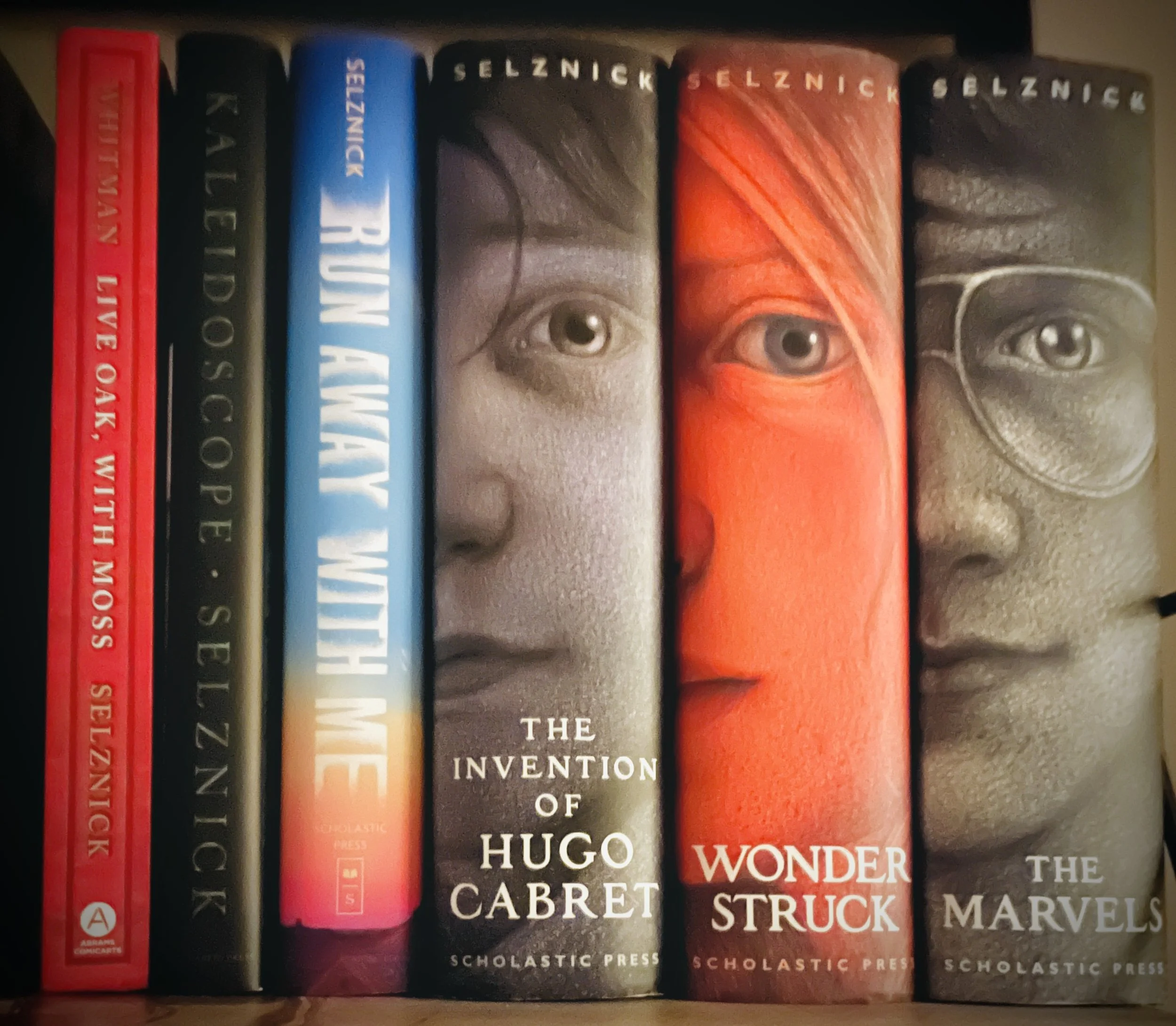
Nearly a decade ago, I was introduced to a remarkable book called The Invention of Hugo Cabret, which opened my eyes to the creative work of Brian Selznick as both an artist and storyteller.
Admittedly, I’m envious of Selznick’s skills on multiple levels. Not only can he depict beautifully hand-drawn scenes with exquisite detail, but he also writes with a descriptive style that feels effortless and fluid. As an aspiring writer myself, I’ve spent years looking at his work with a mixture of admiration and curiosity, trying to understand how he achieves that balance.
Selznick does something that few storytellers manage: he blends visual and written storytelling in a way that feels seamless rather than segmented. For anyone who enjoys classic films, manga, comics, or graphic novels, it’s easy to recognize how powerful the relationship between imagery and language can be, but Selznick takes that a step further.
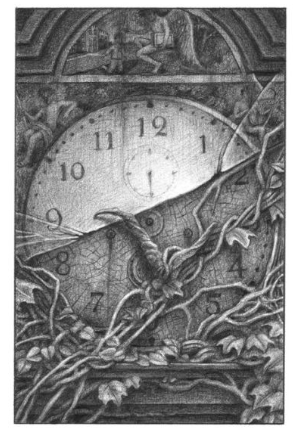
Illustration from Kaleidoscope by Brian Selznick (2021)
He creates a rhythm between the two. Entire sequences unfold through detailed illustrations that sometimes span dozens of pages before transitioning into text that picks up mid-moment, as if the images themselves were part of the sentence. The result is a reading experience that feels continuous, rather than divided between “reading” and “looking.”
The Invention of Hugo Cabret and my other personal favorite, Wonderstruck, have become go-to gifts for friends who are avid readers and for anyone I know with children. At first glance, they appear to be large, intimidating books, but that perception quickly shifts. I’ve found that children especially are often delighted to discover that much of the story is told through images, making the experience feel more immersive than daunting.
Another strength of Selznick’s work is his attention to detail and his clear passion for the subjects he explores. He doesn’t just reference history or art. He immerses himself in it. Whether it’s automatons, the legacy of filmmaker Georges Méliès, or the culture and history of Rome in his recent novel Run Away With Me, his stories feel grounded in a deeper curiosity about the world.
This immersion allows him to layer his narratives in a way that invites readers to discover connections across time. His characters often encounter stories within stories, serving as echoes of the past that mirror their own experiences, which create a sense that storytelling itself is part of the world they inhabit.
Selznick is a truly gifted writer and artist, and his body of work offers something for a wide range of readers. If you’re drawn to visual storytelling, thoughtful characters, and layered narratives, he’s absolutely worth exploring. Below are a few of my personal recommendations:
Run Away With Me (2025)
Selznick’s first venture into YA fiction is a heartfelt story of two young men discovering first love while exploring Rome during one transformative summer in the 1980s.
While this book features less artwork than his earlier works by primarily using illustrations as framing elements, the visual components still enhance the emotional tone of the story. The relationship between Danny and Angelo feels natural, filled with quiet longing and discovery. At the same time, Selznick’s depiction of Rome brings the setting to life, making it feel layered with history, beauty, and hidden meaning.
Kaleidoscope (2021)
This is one of Selznick’s more experimental works. Written during the pandemic while he was separated from his husband, Kaleidoscope is a collection of interconnected short stories that follow two characters bound to each other across time and space, yet often just out of reach.
The stories carry a dreamlike quality, blending elements of myth, fairy tale, and surrealism. Each vignette explores connection, loss, and the idea that some relationships persist across different versions of a life, even when circumstances continually pull them apart.
Wonderstruck (2011)
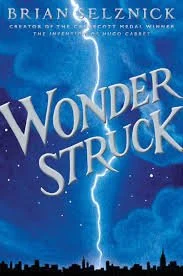
This remains my favorite Selznick book. It tells two parallel stories set decades apart: one told entirely through images and the other through text.
What makes Wonderstruck so compelling is how these two narratives gradually converge. The visual and written storytelling don’t just coexist, they rely on each other, creating a layered experience that rewards patience and attention. Following Ben and Rose as they search for what’s missing in their lives becomes both a narrative journey and a visual one.
Overall, what makes Selznick’s work stand out isn’t just his ability to write or illustrate. It’s how intentionally he uses both to shape the reader’s experience. His stories don’t simply alternate between text and image; they depend on that interplay to fully come to life. For readers, it creates a more immersive way of engaging with a story. For writers, it’s a reminder that storytelling isn’t confined to one form. It’s about how different elements come together to create meaning, which is something truly exceptional.
Book covers and referenced artwork belong to Brian Selznick and their respective publishers. Images used for commentary and review purposes.
