Music and Stories: The Perfect Mash-Up
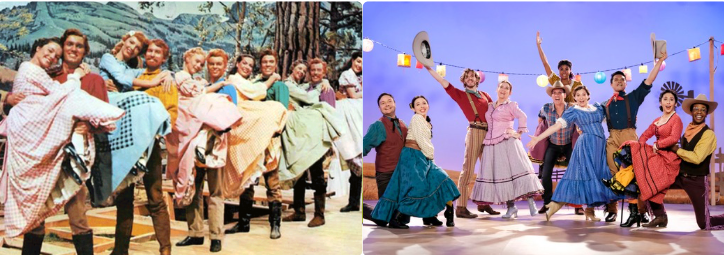
Seven Brides for Seven Brothers (1954) & Crazy Ex-Girlfriend (2019)
Confession time: I hate icebreakers as a social construct. I’ve hated them since I was a child and especially loathe them as an adult, now that I’ve been on both sides of the equation from being the person forced to ask the questions and the one expected to answer them in professional settings. Ninety percent of the time, they feel forced and awkward. I’ve rarely left one of those interactions thinking, Well, that was fulfilling. I made so many meaningful connections.
The worst is when the icebreaker is something vague like, “Tell us a random fact about yourself!” Because apparently saying, “My mind goes blank when put on the spot,” or “I hate how velvet feels,” is not the fun kind of random. Or answering, “What’s one thing you would bring to a desert island?” with “A multi-functional utility shovel” is considered “not in the spirit of the game,” forcing you to sit there awkwardly while some of your coworkers casually begin discussing cannibalism and debating who among you would be eaten first. And suddenly, it feels far too close to Yellowjackets territory for comfort.
But sometimes you get lucky and receive a question that actually makes you excited. I once had a manager who, after months of cringe-inducing weekly icebreakers, finally asked one that made me perk up rather than dread answering.
The question: Would you rather have to sing everything or whisper?
I didn’t have to hesitate. Obviously, sing. Perhaps it’s because I already view myself as “whispering” my way through life, but how wonderful would it be if life worked like a musical? You’d have a personal soundtrack accompanying every moment. Feelings would be shared openly and vibrantly. Perhaps a dance number would even break out as part of the self-expression.
As I enthusiastically shared my thoughts, I waited to hear what my coworkers would say and soon discovered that I was very much in the minority.
Honestly, it would have been the perfect moment for a melancholy solo.
Searching for the Chance to Sing Along
Music and stories have always been intertwined for me. I’ve always loved music’s ability to convey emotion, whether through lyrics, melody, or instrumentation. Many of my favorite albums are soundtracks and scores from films and television shows. And for years, I’ve created playlists for my own stories and characters to help with inspiration.
Ironically, I didn’t grow up as a musical theater kid. But I did grow up loving musicals. My mom and grandma owned sets of classic movie musicals and soundtracks that I returned to repeatedly. While I recognize many of them are viewed differently through a modern lens, I can’t help but still think back of the music fondly. Yes, Seven Brides for Seven Brothers technically romanticizes Stockholm syndrome, abduction, and the objectification of women through charming songs, strapping baritones, and beautiful hoop skirts, but gracious was I obsessed with it.
A few years ago, I was pleased to see musicals experience something of a mini revival on television. Most notably, there was Crazy Ex-Girlfriend created by Rachel Bloom and Aline Brosh McKenna, Zoey’s Extraordinary Playlist created by Austin Winsberg, and Schmigadoon! created by Cinco Paul and Ken Daurio. While some of these series were unfortunately short-lived, each brought something unique and fun to the art of blending storytelling and music for contemporary audiences.
Schmigadoon! (Two Seasons)
Musical as Settings
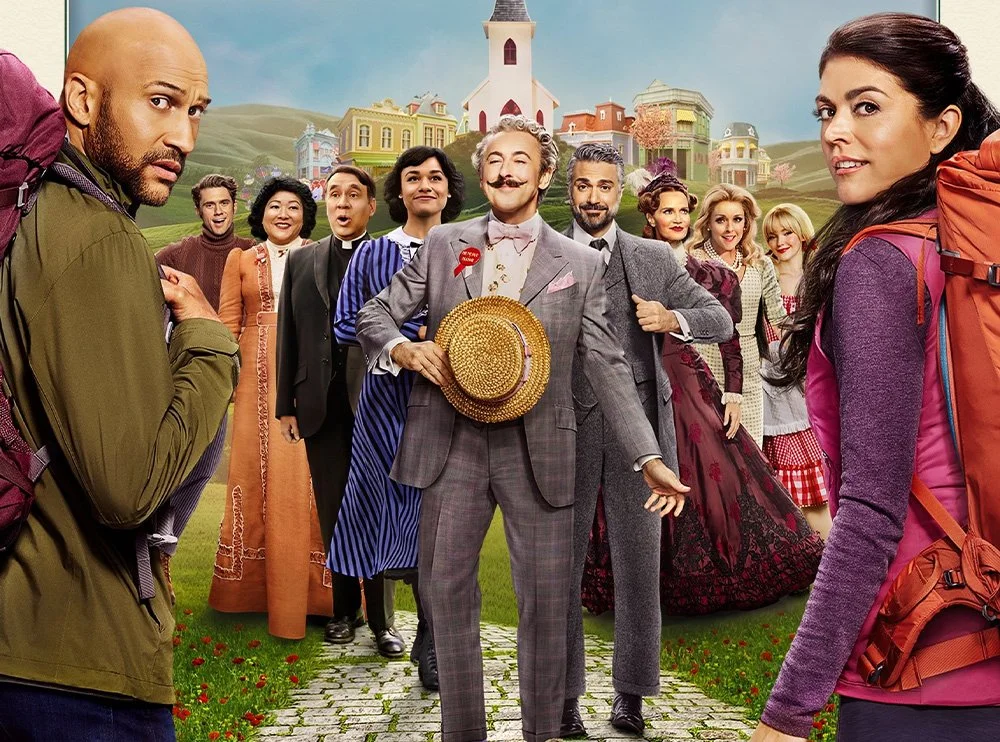
Of the shows mentioned here, Schmigadoon! is the most direct in its parody and celebration of the Golden Age of musicals. The premise is simple: a couple embarks on a backpacking trip in hopes of rekindling their relationship and instead stumbles into a magical town that operates like a 1940s musical brought to life. The catch? They can’t leave until they find true love. Shenanigans ensue when they discover that trying to leave together doesn’t count.
Melissa and Josh are forced to reevaluate their relationship and what true love actually means, all while dealing with the culture shock of living in a musical filled with antiquated customs and exaggerated archetypes.
While I enjoyed the series while watching it, I didn’t find myself revisiting the musical numbers afterward the way I have with other shows. Which is strange considering how much I love the genre being parodied and how talented the cast is. I suppose the tone occasionally leaned darker than my personal preference, but that’s not to say the musical numbers weren’t well done.
What I found particularly interesting was that each season focuses on a different era of musicals. The second season draws heavily from the edgier Broadway productions of the 1960s and 1970s. Admittedly, I was curious to see where a third season might have gone, especially after a Phantom of the Opera easter egg hinted at later musical influences, which was the very era of musicals I grew up listening to with my mom. While season three was ultimately cancelled, the stage adaptation has performed well and even received several Tony nominations, so perhaps the mysterious town of Schmigadoon will rise again someday.
Crazy Ex-Girlfriend (Four Seasons)
Music as Characterization

This is a series I discovered by accident and quickly became hooked on. The premise centers on Rebecca Bunch, a successful New York City lawyer who, despite checking all the boxes of success, feels profoundly unhappy and unfulfilled. Then fate intervenes in the form of Josh Chan, her former summer-camp boyfriend and first love whom she hasn’t seen in over a decade.
For Rebecca, Josh represents everything she believes she’s missing: kindness, nostalgia, and a connection to a time when life seemed simpler and full of possibility. So when Josh casually mentions he’s moving back home to West Covina, California, Rebecca just so happens to quit her job and relocate there as well. Naturally, she insists the move has absolutely nothing to do with Josh and everything to do with pursuing a fresh start and a second chance at happiness.
The show’s unique hook is that Rebecca interprets the world around her through music. Her inner thoughts (whether positive or misguided) manifest as elaborate musical numbers. The writing is incredibly clever because it frequently juxtaposes musical style, visuals, and lyrical content. A polished pop anthem might simultaneously celebrate and critique beauty standards. A heartfelt romantic ballad may reveal motivations that are considerably less romantic than they first appear.
One of my personal favorites is "Love Kernels," which perfectly captures how the show uses elaborate musical numbers to reflect Rebecca's thought process.
While the series begins as a story about Rebecca’s fixation on Josh Chan, it gradually evolves into something far richer. It builds an exceptional ensemble cast and uses the language of musical storytelling from classic Hollywood musicals to Disney films to contemporary pop songs to explore character growth and emotional development. Musical themes reappear as reprises throughout the series, reinforcing how characters evolve over time. It also tackles important subjects including gender expectations, mental health, self-perception, body image, and healthy relationships, both platonic and romantic. Most importantly, it reminds us that everyone deserves the opportunity to discover what they love, not simply who they love.
Zoey’s Extraordinary Playlist (Two Seasons)
Music as Emotional Communication
This show first came onto my radar through a friend I had introduced to Crazy Ex-Girlfriend. The premise follows Zoey Clarke, a software developer who values logic, facts, and efficiency. After a strange accident grants her the ability to hear people’s innermost emotions expressed through song, she’s forced to view the world through an entirely new lens.
While Crazy Ex-Girlfriend relied primarily on original songs, Zoey’s Extraordinary Playlist uses contemporary music to express people's “heart songs.” As Zoey navigates her daily life, she may suddenly encounter strangers performing Whitney Houston’s “I Wanna Dance with Somebody,” or watch a coworker unexpectedly channel his inner Jonas Brother to confess that he’s a “Sucker.”
Fair warning: this show will absolutely tug at your heartstrings. More than once, it left me tearing up. The creators did a wonderful job broadening the scope of the series beyond what could have easily become a standard love-triangle story filled with romantic ballads or power jams. Instead, the show explores identity, loss, grief, family, friendship, and self-discovery, using music as a bridge to emotions that characters often struggle to express directly.
Give Me Something to Sing About
Reflecting on all these shows, and the musicals that came before them, only reinforces my wish that life were a little more like a musical. Not because people would burst into spontaneous choreography at the grocery store (though admittedly that would be entertaining), but because music helps us navigate the countless emotions, challenges, and joys we experience. It gives language to feelings that can otherwise remain locked away and offers us a way to make sense of our own stories.
To borrow a line from “The End of the Movie” from Crazy Ex-Girlfriend, life often refuses to “make narrative sense.”
As someone who is constantly searching for meaning in why things happen, that idea resonates with me. Stories provide satisfying arcs, emotional resolutions, and lessons that neatly reveal themselves by the final chapter. Real life rarely works that way. Revelations arrive slowly. Answers often appear long after we need them, if they appear at all. Yet perhaps that uncertainty is part of what makes stories so meaningful in the first place.
So since I can’t turn my life into a musical, I’ll settle for weaving that sense of narrative into my own stories and playlists.
Keep singing.
Music and stories give us safe spaces to explore themes of grief, isolation, and other mental health struggles, but sometimes those emotions reach beyond the screen. If you’re currently struggling, please know that you’re not alone. Resources like Good Grief and National Alliance on Mental Illness (NAMI) can provide support.
Images are used under fair use for commentary and analysis. All copyrights remain with their original owners.
